



Sonipat, Haryana (online)
O.P. Jindal Global University Online courses and fees
Online degrees from O.P. Jindal Global University, Sonipat. Live online classes with JGU faculty; 1-year master's and 3-year UG programmes.
- Full programme fee
- ₹2.2L – ₹5.5L
- UG 3 years · most PG 1 year
- EMI
- 0% interest
- Through Jodo, 12 months
- THE Online Learning 2024
- Gold
- Highest overall score
- Online programmes
- 22
Online programmes: duration, subjects and careers
O.P. Jindal Global University Online offers fully online degrees from O.P. Jindal Global University (JGU), Sonipat (Delhi NCR), founded in 2009 and given Institution of Eminence status by the Ministry of Education. Classes are live and online with JGU faculty. There are 3 undergraduate programmes (3 years) and 19 one-year master's programmes in finance, AI, design, communication, law, policy, education and more. Not to be confused with O.P. Jindal University, Raigarh, a different university.
| Programme | Duration | Specialisations | Registration fee | Full course |
|---|---|---|---|---|
| B.Com (International Accounting & Finance) | 3 years (12 terms) | No specialisation | ₹25,000 | ₹2,20,000 |
| B.Sc. (AI & Finance) | 3 years (12 terms) | No specialisation | ₹25,000 | ₹2,20,000 |
| B.Sc. (Finance & Entrepreneurship) | 3 years (12 terms) | No specialisation | ₹25,000 | ₹2,20,000 |
| Programme | Duration | Specialisations | Registration fee | Full course |
|---|---|---|---|---|
| M.Sc. AI & Finance | 1 year (4 terms) | No specialisation | ₹25,000 | ₹2,75,000 |
| M.Sc. (Global Risk Management) | 1 year (4 terms) | No specialisation | ₹25,000 | ₹2,75,000 |
| M.Sc. Design Thinking, Innovation & Strategy | 1 year (4 terms) | No specialisation | ₹25,000 | ₹2,75,000 |
| M.Sc. Entrepreneurship, Innovation & Startup | 1 year (4 terms) | No specialisation | ₹25,000 | ₹2,75,000 |
| M.Sc. Family Business | 1 year (4 terms) | No specialisation | ₹25,000 | ₹2,75,000 |
| M.Sc. Strategic Communication | 1 year (4 terms) | No specialisation | ₹25,000 | ₹2,75,000 |
| M.Sc. Environmental Change & Sustainability | 1 year (4 terms) | No specialisation | ₹25,000 | ₹2,75,000 |
| M.Sc. Development Studies | 1 year (4 terms) | No specialisation | ₹25,000 | ₹2,75,000 |
| M.Sc. Global Health & Human Development | 1 year (4 terms) | No specialisation | ₹25,000 | ₹2,75,000 |
| M.Des. UX + AI | 1 year (4 terms) | AI (programme is 'Specializing in AI') | ₹50,000 | ₹5,50,000 |
| M.A. Legislative Drafting | 1 year (4 terms) | No specialisation | ₹25,000 | ₹2,75,000 |
| M.A. Criminology & Criminal Justice | 1 year (4 terms) | No specialisation | ₹25,000 | ₹2,75,000 |
| M.A. Political Communication | 1 year (4 terms) | No specialisation | ₹25,000 | ₹2,75,000 |
| M.A. Electoral Analysis & Management | 1 year (4 terms) | No specialisation | ₹25,000 | ₹2,75,000 |
| M.A. TESOL | 1 year (4 terms) | Critical Pedagogy, Corpus Linguistics | ₹25,000 | ₹2,75,000 |
| M.A. (Educational Leadership & Governance) | 1 year (4 terms) | School Education, Higher Education | ₹25,000 | ₹2,75,000 |
| M.A. (American Studies) | 1 year (4 terms) | No specialisation | ₹25,000 | ₹2,75,000 |
| M.A. (India Studies) | 1 year (4 terms) | Pathway 1: Electives, Pathway 2: Dissertation | ₹25,000 | ₹2,75,000 |
| M.A. Museology & Cultural Heritage | 1 year (4 terms) | No specialisation | ₹25,000 | ₹2,75,000 |
All programmes are fully online: live virtual classes with JGU faculty, recorded material and projects on the learning platform. UG programmes run in 13-week terms (12 terms over 3 years); most master's programmes are 1 year in 4 terms.
Want help choosing a programme or with the application? A Disha Stars counsellor can guide you for free.
Talk to a counsellorSource: O.P. Jindal Global University Online programme brochures shared by O.P. Jindal Global University. Checked 3 November 2026. Confirm the current fee and dates before you pay.
Subjects, specialisations and careers
Tap a programme for its overview, term-wise course structure, fee structure, payment options, faculty and careers.
B.Com (International Accounting & Finance)3 years · ₹2,20,000 full programme · 172 credits
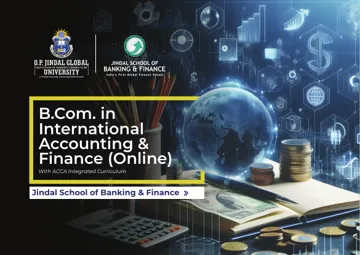
An online B.Com from the Jindal School of Banking & Finance (JSBF) that builds a broad commerce base (economics, management, law, quantitative methods, financial markets, technology) with a focused accounting and finance pathway. Pathway study covers management accounting, financial reporting and analysis, corporate finance, taxation, performance management, strategy, corporate law and audit. The curriculum is integrated with the ACCA professional certification body. It runs fully online over three years in twelve 13-week terms with live virtual classes.
3 years, 12 terms of 13 weeks · 172 credits · Jindal School of Banking & Finance (JSBF) · Fully online
Eligibility: Minimum 50% in Class 12 with Maths, Business Maths, Statistics, Economics or Accounting as one of the subjects
Selection: Selection will be based on a comprehensive review of the application, statement of purpose, and academic transcripts. Shortlisted candidates may also be invited for a brief personal interview, if required.
Documents: Application; Statement of purpose; Academic transcripts
Course structure
Year 1 – Term 1
- Microscopes & Markets: Parallel Histories
- Principles of Economics
- Financial Mathematics
- Financial Accounting
Year 1 – Term 2
- Fundamental Principles of Management
- Business Law & Ethics
- Critical Thinking, Self Reflection & Communication
- Corporate Finance
Year 1 – Term 3
- Workplace Dynamics and Professional Presence
- FinTech, Blockchain, and Digital Currency
- Business Statistics and Decision Sciences
- Introduction of Environmental Science and ESG Practices
Year 1 – Term 4
- Tableau for Data Visualisation
- AI for Finance and Business
- Management Accounting
- Financial Reporting & Analysis
Year 2 – Term 5
- Fundamentals of Financial Markets
- Advanced Corporate Finance
- Banking Systems and Technology
- Behavioral Economics and Social Psychology
Year 2 – Term 6
- Python for Financial Data Analysis
- Taxation
- Performance Management
- Economics for Change: Stakeholder Engagement and Responsible Citizenship
Year 2 – Term 7
- Strategic Management
- Marketing of Financial Services
- Elective 1
Year 2 – Trimester 8
- Investment Analysis and Portfolio Management
- Corporate Law
- Elective 2
Year 3 – Term 9
- AI Ethics and Society
- Audit & Assurance
- Elective 3
Year 3 – Term 10
- Elective 4
- Elective 5
- Elective 6
Year 3 – Term 11
- Advanced Core
- Capstone Project 1/ Co-Op / Certification
Year 3 – Term 12
- Advanced Core
- Capstone Project 2/Co-op/ Certification
Electives (choose from)
- Social Entrepreneurship
- Introduction to Analytics and Artificial Intelligence
- Scaling Up MSMEs and Family Businesses
- Banking Systems and Technology
- Intrapreneurship
- Cybersecurity and Privacy Regulations
- Innovation and Product Development
- Database Management Systems for Finance
- Startup Incubation and Innovation Workshop Series
- Introduction to Machine Learning
- Digital Marketing and Analytics
- Theories and Applications of Agentic AI
- Business Model and Strategy for New Ventures
- Neural Networks and Deep Learning
- Digital Entrepreneurship and Technology Commercialization
- Robotic Process Automation
Career options: Financial Analyst, Auditor or Assurance Specialist, Tax Consultant, Management Accountant, Investment or Risk Analyst, Corporate Finance Professional, Entrepreneur or Business Advisor
Pathways
- Capstone Project: Capstone Project 1 (Term 11) and Capstone Project 2 (Term 12)
- Co-Op: Alternative in the Capstone Project 1/2 slots (Terms 11–12); no further detail given
- Certification: Alternative in the Capstone Project 1/2 slots (Terms 11–12); no further detail given
Capstone: Capstone Project 1 (Term 11) and Capstone Project 2 (Term 12), each of which can instead be taken as a Co-op or Certification; no further description given.
What you will be able to do
- • Analyse economic, financial and business information using quantitative, statistical and digital tools for evidence-based decisions
- • Prepare, interpret and evaluate financial and management accounting information, performance and financial reporting
- • Evaluate corporate finance, banking, investment, risk, taxation, audit and legal considerations in decisions
- • Assess business and financial decisions from ethical, governance, sustainability, technological and societal perspectives
- • Communicate financial and business analysis and recommendations clearly to diverse audiences
Fee structure
| Component | Amount | When |
|---|---|---|
| Registration Fee | ₹25,000 | To be paid upon the acceptance of the offer letter |
| Remaining Fee | ₹1,95,000 | To be paid as per the structure given by the University |
| Total | ₹2,20,000 |
Payment options for Indian students (incl. NRIs with Aadhaar and PAN)
- • Payment modes: credit cards, debit cards, net banking, UPI and international payment methods.
- • Option 1 – Full Payment: registration fee at the time of registration; complete remaining programme fee within 10 days from the date of registration.
- • Option 2 – Jodo Flex: registration fee at registration; remaining programme fee in a structured plan of 3, 6 or 9 instalments as per the applicable payment schedule and terms.
- • Option 3 – Jodo EMI (12 months): registration fee at registration; remaining programme fee in monthly instalments over 12 months, subject to eligibility, approval and applicable terms and conditions.
- • Note: Indian citizens incl. NRIs with valid Indian Aadhaar and PAN may use the Indian-national options, subject to eligibility and verification.
Payment options for foreign nationals
- • Option 1 – Full Payment: registration fee at the time of registration; complete programme fee within 10 days from the date of registration.
- • Option 2 – Three-Instalment Payment Plan: registration fee at registration; programme fee in three instalments as per the applicable fee schedule for the programme (instalment amounts/dates not stated).
Faculty (20)
- Prof. (Dr.) Dayanand PandeyProfessor & Dean, JSBF
 Prof. (Dr.) Ram B. RamachandranProfessor & Vice Dean, JSBF; Chair, Center for Digital Learning
 Prof. (Dr.) Prashant SharmaProfessor & Vice Dean
 Prof. (Dr.) Amlan Das GuptaAssociate Professor and Associate Dean
 Prof. (Dr.) Nishika BhatiaAssociate Professor & Assistant Dean
 Prof. (Dr.) Abhay PantAssociate Professor
 Prof. (Dr.) Saurabh SharmaAssociate Professor
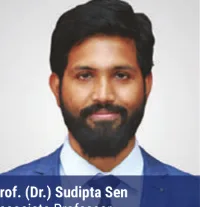 Prof. (Dr.) Sudipta SenAssociate Professor
 Prof. (Dr.) Aastha MittalAssistant Professor
 Prof. (Dr.) Anushka VermaAssistant Professor
 Prof. (Dr.) Bhavya SrivastavaAssistant Professor
 Prof. (Dr.) Deeksha GargAssistant Professor
 Prof. (Dr.) HansaAssistant Professor
 Prof. (Dr.) Ibna BhanAssistant Professor
 Prof. (Dr.) Jannet JohnAssistant Professor
 Prof. (Dr.) Kewal SinghAssistant Professor
 Prof. (Dr.) Kranthi NanduriAssistant Professor
 Prof. (Dr.) Mayank GangwaniAssistant Professor
 Prof. (Dr.) Navendu PrakashAssistant Professor
 Prof. (Dr.) Neha GuptaAssistant Professor
B.Sc. (AI & Finance)3 years · ₹2,20,000 full programme · 172 credits

An online B.Sc. from JSBF built at the meeting point of finance, analytics and artificial intelligence. Alongside economics, accounting, corporate finance, financial markets and quantitative methods, learners study analytics and AI, machine learning, databases for finance, agentic AI, neural networks and deep learning, robotic process automation, and cybersecurity and privacy. It runs fully online over three years in twelve 13-week terms, moving from common foundations to specialised AI and data courses, electives and advanced core subjects.
3 years, 12 terms of 13 weeks · 172 credits · Jindal School of Banking & Finance (JSBF) · Fully online
Eligibility: Minimum 50% in Class 12, having studied at least one of: Mathematics, Business Mathematics, Statistics or Business Studies
Selection: Admission to the programme is based on a multi-step evaluation process: Submit the Application Form; Appear for FACTA (Finance Aptitude and Critical Thinking Assessment) conducted by the university; Personal Interview – shortlisted candidates are invited for a personal interview; Final Selection – admission is granted based on overall performance across the assessment and interview.
Course structure
Year 1 – Term 1
- Microscopes and Markets: Parallel Histories
- Principles of Economics
- Financial Mathematics
- Financial Accounting
Year 1 – Term 2
- Fundamental Principles of Management
- Business Law and Ethics
- Critical Thinking, Self Reflection, and Communication
- Corporate Finance
Year 1 – Term 3
- Workplace Dynamics and Professional Presence
- FinTech, Blockchain, and Digital Currency
- Business Statistics and Decision Sciences
- Introduction of Environmental Science and ESG Practices
Year 1 – Term 4
- Tableau for Data Visualisation
- AI for Finance and Business
- Introduction to Analytics and Artificial Intelligence
- Cybersecurity and Privacy Regulations
Year 2 – Term 5
- Fundamentals of Financial Markets
- Introduction to Machine Learning
- Banking Systems and Technology
- Behavioral Economics and Social Psychology
Year 2 – Term 6
- Python for Financial Data Analysis
- Database Management Systems for Finance
- Theories and Applications of Agentic AI
- Economics for Change: Stakeholder Engagement and Responsible Citizenship
Year 2 – Term 7
- Neural Networks and Deep Learning
- Risk Management and Modelling
- Marketing of Financial Services
- Elective 1
Year 2 – Term 8
- Investment Analysis and Portfolio Management
- Robotic Process Automation
- Elective 2
Year 3 – Term 9
- AI Ethics and Society
- Elective 3
- Elective 4
Year 3 – Term 10
- Elective 5
- Elective 6
- Elective 7
Year 3 – Term 11
- Advanced Core
- Capstone Project 1/ Co-Op / Certification
Year 3 – Term 12
- Advanced Core
- Capstone Project 2 / Co-Op / Certification
Electives (choose from)
- Social Entreprenuership
- Scaling Up MSMEs and Family Businesses
- Intraprenuership
- Innovation and Product Development
- Startup Incubation and Innovation Workshop Series
- Digital Marketing and Analytics
- Business Model and Strategy for New Ventures
- Digital Entreprenuership and Technology Commercialization
- Management Accounting
- Financial Reporting & Analysis
- Banking Systems and Technology
- Advanced Corporate Finance
- Taxation
- Strategic Management
- Performance Management
- Corporate Law
- Audit & Assurance
Pathways
- Capstone Project: Capstone Project 1 (Term 11) and Capstone Project 2 (Term 12), 6 credits each
- Co-Op: Offered as an alternative in the Capstone Project 1/2 slots (Terms 11–12); no further detail given
- Certification: Offered as an alternative in the Capstone Project 1/2 slots (Terms 11–12); no further detail given
Capstone: Capstone Project 1 (Term 11) and Capstone Project 2 (Term 12), 6 credits each, which can alternatively be a Co-Op or Certification; no further description given.
Campus immersion: Chair's message mentions 'immersive campus learning experiences'; no dates, duration or cost given.
What you will be able to do
- • Analyse economic, financial and business information with quantitative and statistical methods
- • Apply programming, data visualisation, databases, analytics and AI methods to finance and business problems
- • Evaluate financial markets, investment portfolios and risk using financial, quantitative and data-driven approaches
- • Assess AI and digital technologies from cybersecurity, data privacy, legal, ethical, sustainability and societal perspectives
- • Communicate data-driven financial and business analysis clearly to diverse audiences
Fee structure
| Component | Amount | When |
|---|---|---|
| Registration Fee | ₹25,000 | To be paid upon the acceptance of the offer letter |
| Remaining Fee | ₹1,95,000 | To be paid as per the structure given by the University |
| Total | ₹2,20,000 |
Payment options for Indian students (incl. NRIs with Aadhaar and PAN)
- • Option 1 – Full Payment: registration fee at the time of registration; complete remaining programme fee within 10 days from the date of registration.
- • Option 2 – Jodo Flex: registration fee at registration; remaining programme fee in a structured plan of 3, 6 or 9 instalments as per the applicable payment schedule and terms.
- • Option 3 – Jodo EMI (12 months): registration fee at registration; remaining programme fee in monthly instalments over 12 months, subject to eligibility, approval and applicable terms and conditions.
- • Note: Indian citizens incl. NRIs with valid Indian Aadhaar and PAN may use the Indian-national options, subject to eligibility and verification.
Payment options for foreign nationals
- • Option 1 – Full Payment: registration fee at the time of registration; complete programme fee within 10 days from the date of registration.
- • Option 2 – Three-Instalment Payment Plan: registration fee at registration; programme fee in three instalments as per the applicable fee schedule for the programme (instalment amounts/dates not stated).
Faculty (20)
- Prof. (Dr.) Dayanand PandeyProfessor & Dean, JSBF
- Prof. (Dr.) Ram B. RamachandranProfessor & Vice Dean, JSBF; Chair, Center for Digital Learning
- Prof. (Dr.) Prashant SharmaProfessor & Vice Dean
- Prof. (Dr.) Amlan Das GuptaAssociate Professor and Associate Dean
- Prof. (Dr.) Nishika BhatiaAssociate Professor & Assistant Dean
- Prof. (Dr.) Abhay PantAssociate Professor
- Prof. (Dr.) Saurabh SharmaAssociate Professor
- Prof. (Dr.) Sudipta SenAssociate Professor
- Prof. (Dr.) Aastha MittalAssistant Professor
- Prof. (Dr.) Anushka VermaAssistant Professor
- Prof. (Dr.) Bhavya SrivastavaAssistant Professor
- Prof. (Dr.) Deeksha GargAssistant Professor
- Prof. (Dr.) HansaAssistant Professor
- Prof. (Dr.) Ibna BhanAssistant Professor
- Prof. (Dr.) Jannet JohnAssistant Professor
- Prof. (Dr.) Kewal SinghAssistant Professor
- Prof. (Dr.) Kranthi NanduriAssistant Professor
- Prof. (Dr.) Mayank GangwaniAssistant Professor
- Prof. (Dr.) Navendu PrakashAssistant Professor
- Prof. (Dr.) Neha GuptaAssistant Professor
B.Sc. (Finance & Entrepreneurship)3 years · ₹2,20,000 full programme · 172 credits

An online B.Sc. from JSBF that grounds entrepreneurial thinking in financial and analytical discipline. Core study in economics, accounting, corporate finance, financial markets, quantitative methods and digital technologies is combined with pathway courses in social entrepreneurship, MSME and family-business growth, intrapreneurship, innovation and product development, new-venture strategy, startup incubation, digital marketing and technology commercialisation. It runs fully online over three years in twelve 13-week terms.
3 years, 12 terms of 13 weeks · 172 credits · Jindal School of Banking & Finance (JSBF) · Fully online
Eligibility: Minimum 50% in Class 12, having studied at least one of: Mathematics, Business Mathematics, Statistics or Business Studies
Selection: Admission to the programme is based on a multi-step evaluation process: Submit the Application Form; Appear for FACTA (Finance Aptitude and Critical Thinking Assessment) conducted by the university; Personal Interview – shortlisted candidates are invited for a personal interview; Final Selection – admission is granted based on overall performance across the assessment and interview.
Course structure
Year 1 – Term 1
- Microscopes and Markets: Parallel Histories
- Principles of Economics
- Financial Mathematics
- Financial Accounting
Year 1 – Term 2
- Fundamental Principles of Management
- Business Law and Ethics
- Critical Thinking, Self Reflection, and Communication
- Corporate Finance
Year 1 – Term 3
- Workplace Dynamics and Professional Presence
- FinTech, Blockchain, and Digital Currency
- Business Statistics and Decision Sciences
- Introduction of Environmental Science and ESG Practices
Year 1 – Term 4
- Tableau for Data Visualisation
- AI for Finance and Business
- Social Entreprenuership
- Scaling Up MSMEs and Family Businesses
Year 2 – Term 5
- Fundamentals of Financial Markets
- Intrapreneurship
- Innovation and Product Development
- Behavioral Economics and Social Psychology
Year 2 – Term 6
- Python for Financial Data Analysis
- Startup Incubation and Innovation Workshop Series
- Digital Marketing and Analytics
- Economics for Change: Stakeholder Engagement and Responsible Citizenship
Year 2 – Term 7
- Business Model and Strategy for New Ventures
- Risk Management and Modelling
- Marketing of Financial Services
- Elective 1
Year 2 – Term 8
- Investment Analysis and Portfolio Management
- Digital Entreprenuership and Technology Commercialization
- Elective 2
Year 3 – Term 9
- AI Ethics and Society
- Elective 3
- Elective 4
Year 3 – Term 10
- Elective 5
- Elective 6
- Elective 7
Year 3 – Term 11
- Advanced Core
- Capstone Project 1/ Co-Op / Certification
Year 3 – Term 12
- Advanced Core
- Capstone Project 2/ Co-Op / Certification
Electives (choose from)
- Introduction to Analytics and Artificial Intelligence
- Banking Systems and Technology
- Cybersecurity and Privacy Regulations
- Database Management Systems for Finance
- Introduction to Machine Learning
- Theories and Applications of Agentic AI
- Management Accounting
- Robotic Process Automation
- Neural Networks and Deep Learning
- Advanced Corporate Finance
- Financial Reporting & Analysis
- Strategic Management
- Taxation
- Corporate Law
- Performance Management
- Audit & Assurance
Pathways
- Capstone Project: Capstone Project 1 (Term 11) and Capstone Project 2 (Term 12), 6 credits each
- Co-Op: Offered as an alternative in the Capstone Project 1/2 slots (Terms 11–12); no further detail given
- Certification: Offered as an alternative in the Capstone Project 1/2 slots (Terms 11–12); no further detail given
Capstone: Capstone Project 1 (Term 11) and Capstone Project 2 (Term 12), 6 credits each, which can alternatively be a Co-Op or Certification; no further description given.
Campus immersion: Dean's message describes the learning structure as combining online academic depth, 'on-campus experiential immersion' and co-op industry engagements; no dates, duration or cost given.
What you will be able to do
- • Analyse economic, financial and business information with quantitative and digital tools
- • Identify and evaluate entrepreneurial opportunities and develop business models and strategies for ventures
- • Apply finance, marketing, innovation and product development to venture planning, growth, investment, risk and technology commercialisation
- • Evaluate entrepreneurial decisions from ethical, legal, sustainability, social and technological perspectives
- • Communicate venture ideas and strategic recommendations clearly to diverse stakeholders
Fee structure
| Component | Amount | When |
|---|---|---|
| Registration Fee | ₹25,000 | To be paid upon the acceptance of the offer letter |
| Remaining Fee | ₹1,95,000 | To be paid as per the structure given by the University |
| Total | ₹2,20,000 |
Payment options for Indian students (incl. NRIs with Aadhaar and PAN)
- • Option 1 – Full Payment: registration fee at the time of registration; complete remaining programme fee within 10 days from the date of registration.
- • Option 2 – Jodo Flex: registration fee at registration; remaining programme fee in a structured plan of 3, 6 or 9 instalments as per the applicable payment schedule and terms.
- • Option 3 – Jodo EMI (12 months): registration fee at registration; remaining programme fee in monthly instalments over 12 months, subject to eligibility, approval and applicable terms and conditions.
- • Note: Indian citizens incl. NRIs with valid Indian Aadhaar and PAN may use the Indian-national options, subject to eligibility and verification.
Payment options for foreign nationals
- • Option 1 – Full Payment: registration fee at the time of registration; complete programme fee within 10 days from the date of registration.
- • Option 2 – Three-Instalment Payment Plan: registration fee at registration; programme fee in three instalments as per the applicable fee schedule for the programme (instalment amounts/dates not stated).
Faculty (20)
- Prof. (Dr.) Dayanand PandeyProfessor & Dean, JSBF
- Prof. (Dr.) Ram B. RamachandranProfessor & Vice Dean, JSBF; Chair, Center for Digital Learning
- Prof. (Dr.) Prashant SharmaProfessor & Vice Dean
- Prof. (Dr.) Amlan Das GuptaAssociate Professor and Associate Dean
- Prof. (Dr.) Nishika BhatiaAssociate Professor & Assistant Dean
- Prof. (Dr.) Abhay PantAssociate Professor
- Prof. (Dr.) Saurabh SharmaAssociate Professor
- Prof. (Dr.) Sudipta SenAssociate Professor
- Prof. (Dr.) Aastha MittalAssistant Professor
- Prof. (Dr.) Anushka VermaAssistant Professor
- Prof. (Dr.) Bhavya SrivastavaAssistant Professor
- Prof. (Dr.) Deeksha GargAssistant Professor
- Prof. (Dr.) HansaAssistant Professor
- Prof. (Dr.) Ibna BhanAssistant Professor
- Prof. (Dr.) Jannet JohnAssistant Professor
- Prof. (Dr.) Kewal SinghAssistant Professor
- Prof. (Dr.) Kranthi NanduriAssistant Professor
- Prof. (Dr.) Mayank GangwaniAssistant Professor
- Prof. (Dr.) Navendu PrakashAssistant Professor
- Prof. (Dr.) Neha GuptaAssistant Professor
M.Sc. AI & Finance1 year · ₹2,75,000 full programme · 66 credits

A one-year online M.Sc. from the Jindal School of Banking & Finance (JSBF) that combines artificial intelligence, machine learning, data analytics and financial knowledge for the digital economy. It covers areas such as machine learning for financial markets, algorithmic trading, AI-driven risk assessment, NLP, agentic AI, blockchain and regulatory compliance, with attention to the responsible and ethical use of AI in finance. The programme runs in a quarterly (four-term) format with live online sessions, virtual labs, real datasets and case studies from banks, fintech firms and financial institutions.
1 year, 4 terms · 66 credits · Jindal School of Banking & Finance (JSBF) · Fully online
Eligibility: Undergraduate degree with at least 50% marks; candidates below 50% must take the JSAT exam and attend a mandatory interview
Selection: Selection will be based on a comprehensive review of the application, statement of purpose, and academic transcripts. Shortlisted candidates may also be invited for a brief personal interview, if required.
Documents: Statement of purpose; Academic transcripts
Course structure
Term 1
- Financial Management
- Financial Mathematics and Statistics
- Financial Markets and Instruments
- Python programming for Financial Applications
Term 2
- Financial Data Analytics and Time Series
- International Corporate Social Responsibility & Ethics
- Technology Risk Management
- Global Economy and Geopolitical Risk
Term 3
- Natural Language Processing for Financial Markets
- Fintech Innovations and Digital Banking
- Portfolio Management and Robo-Advisory
- Corporate Governance and Compliance
Term 4
- Theories and Applications of Agentic AI
- Algorithmic Trading and Quantitative Strategies
- Blockchain and Digital Currency
- Capstone Project
Career options: AI & Machine Learning Specialist, Quantitative Analyst (Quant), Fintech Product Manager, Risk & Compliance Analyst, Data Scientist (Finance Domain), Blockchain & Digital Asset Analyst, RegTech Specialist
Capstone: A 4-credit Capstone Project in Term 4.
What you will be able to do
- • Apply programming, statistical, time-series, machine learning, NLP and generative AI techniques to structured and unstructured data for financial and business problems
- • Evaluate financial information, markets, instruments, investments, corporate financing and risk in macroeconomic and geopolitical context using AI-enabled approaches
- • Design and apply analytical and computational models for forecasting, portfolio analysis, capital budgeting, risk management and robo-advisory
- • Critically evaluate the opportunities, limitations, ethics and risks of AI in finance, including transparency, bias, privacy, cybersecurity and accountability
Fee structure
| Component | Amount | When |
|---|---|---|
| Registration Fee Payable | ₹25,000 | To be paid upon the acceptance of the offer letter |
| Remaining Fee Payable | ₹2,50,000 | To be paid as per the structure given by the University |
| Total | ₹2,75,000 |
Payment options for Indian students (incl. NRIs with Aadhaar and PAN)
- • Option 1: Full Payment - registration fee at registration; complete remaining programme fee within 10 days from the date of registration.
- • Option 2: Jodo Flex - registration fee at registration; remaining programme fee in a structured instalment plan of 3, 6, or 9 instalments, as per the applicable payment schedule and terms.
- • Option 3: Jodo EMI - 12 Months - registration fee at registration; remaining programme fee in monthly instalments over 12 months, subject to eligibility, approval, and applicable terms and conditions.
- • Note: Indian citizens, including NRIs, with valid Indian Aadhaar and PAN may use the Indian National options, subject to eligibility and verification.
Payment options for foreign nationals
- • Option 1: Full Payment - registration fee at registration; complete programme fee within 10 days from the date of registration.
- • Option 2: Three-Instalment Payment Plan - registration fee at registration; programme fee in three instalments, as per the applicable fee schedule mentioned for the programme.
Faculty (20)
- Prof. (Dr.) Dayanand PandeyDean, Jindal School of Banking & Finance
- Prof. (Dr.) Ram B. RamachandranProfessor & Vice Dean; Chair, Center for Digital Learning, JSBF
- Prof. (Dr.) Prashant SharmaProfessor & Vice Dean
- Prof. (Dr.) Tarun DhingraProfessor & Vice Dean
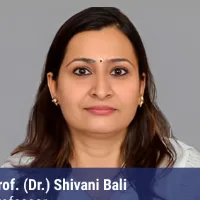 Prof. (Dr.) Shivani BaliProfessor
- Prof. (Dr.) Amlan Das GuptaAssociate Professor and Associate Dean
- Prof. (Dr.) Monika GuptaAssociate Professor and Associate Dean (Academic Affairs)
 Prof. (Dr.) Chavi AsraniAssociate Professor & Assistant Dean
- Prof. (Dr.) Saurabh TiwariProfessor
- Prof. (Dr.) Saurabh SharmaAssociate Professor
- Prof. (Dr.) Sudipta SenAssociate Professor
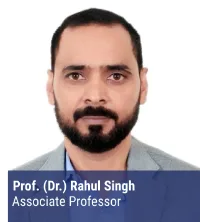 Prof. (Dr.) Rahul SinghAssociate Professor
- Prof. (Dr.) Deeksha GargAssistant Professor
- Prof. (Dr.) Aastha MittalAssistant Professor
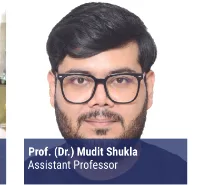 Prof. (Dr.) Mudit ShuklaAssistant Professor
 Prof. (Dr.) Abhishek KumarAssistant Professor
- Prof. (Dr.) Rupesh SharmaAssistant Professor
- Prof. (Dr.) Yashika SardanaAssistant Professor
- Prof. Siddharth UpretiAssistant Professor of Practice
- Prof. (Dr.) Navendu PrakashAssistant Professor
M.Sc. (Global Risk Management)1 year · ₹2,75,000 full programme · 64 credits
A one-year online M.Sc. in Global Risk Management from the Jindal School of Banking & Finance. The curriculum is aligned with GARP's Financial Risk Manager (FRM) Level I and Level II syllabus and combines it with academic study of market, credit, liquidity, operational, technology, geopolitical and regulatory risk, with attention to India and other emerging markets. It is delivered in a quarterly format of four terms with live virtual sessions, case studies and peer learning.
1 year, 4 terms (quarterly format) · 64 credits · Jindal School of Banking & Finance (JSBF) · Fully online
Eligibility: Undergraduate degree with at least 50% marks; those below 50% must take the JSAT exam and a mandatory interview
Selection: Selection will be based on a comprehensive review of the application, statement of purpose, and academic transcripts. Shortlisted candidates may also be invited for a brief personal interview, if required.
Documents: Application; Statement of purpose; Academic transcripts
Course structure
Term 1
- Principles of Enterprise Risk Management [FRM 1]
- Financial Mathematics & Statistics (Quantitative Analysis) [FRM 1]
- Financial Markets & Instruments [FRM 1]
- Organizational Structures & Behaviour
Term 2
- Valuation & Risk Models [FRM 1]
- International Corporate Social Responsibility & Ethics
- Technology Risk Management
- Global Economy & Geopolitical Risk
Term 3
- Risk Management & Investment Management [FRM 2]
- Liquidity & Treasury Risk Measurement & Management [FRM 2]
- Market Risk Measurement & Management [FRM 2]
- Operational & Supply Chain Risk & Resilience [FRM 2]
Term 4
- Credit Risk Measurement & Management [FRM 2]
- Strategic Leadership in Crisis Management
- Current Issues in Financial Markets [FRM 2]
- Risk Architecture and Financial Regulations
Career options: Risk Analyst, Enterprise Risk Manager, Credit and Market Risk Specialist, Compliance Officer, Risk Consultant, Quantitative Analyst
What you will be able to do
- • Understand the global financial system, ERM frameworks and regulatory/governance architecture incl. Basel standards
- • Apply quantitative and data-driven techniques (VaR, volatility forecasting, derivative pricing, hedging, simulation, machine learning) to market, credit, liquidity, operational and investment risk
- • Evaluate emerging and interconnected risks (geopolitical, technological, cyber, climate, supply chain, digital assets) in strategy and risk frameworks
- • Show ethical judgement and commitment to sustainability, governance and strong risk culture
- • Lead through uncertainty and crisis and communicate risk assessments to boards, regulators and stakeholders
Fee structure
| Component | Amount | When |
|---|---|---|
| Registration Fee | ₹25,000 | To be paid upon the acceptance of the offer letter |
| Remaining Fee | ₹2,50,000 | To be paid as per the structure given by the University |
| Total | ₹2,75,000 |
Payment options for Indian students (incl. NRIs with Aadhaar and PAN)
- • Option 1 – Full Payment: registration fee at the time of registration; complete remaining programme fee within 10 days from the date of registration.
- • Option 2 – Jodo Flex: registration fee at registration; remaining programme fee in a structured plan of 3, 6 or 9 instalments as per the applicable payment schedule and terms.
- • Option 3 – Jodo EMI (12 months): registration fee at registration; remaining programme fee in monthly instalments over 12 months, subject to eligibility, approval and applicable terms and conditions.
- • Note: Indian citizens incl. NRIs with valid Indian Aadhaar and PAN may use the Indian-national options, subject to eligibility and verification.
Payment options for foreign nationals
- • Option 1 – Full Payment: registration fee at the time of registration; complete programme fee within 10 days from the date of registration.
- • Option 2 – Two-Instalment Payment Plan: registration fee at registration; programme fee in two instalments as per the applicable fee schedule for the programme (instalment amounts/dates not stated).
Faculty (20)
- Prof. (Dr.) Dayanand PandeyDean, JSBF
- Prof. (Dr.) Ram B. RamachandranProfessor and Vice Dean; Chair, Center for Digital Learning
- Prof. (Dr.) Prashant SharmaProfessor & Vice Dean
- Prof. (Dr.) Tarun DhingraProfessor & Vice Dean
- Prof. (Dr.) Shivani BaliProfessor
- Prof. (Dr.) Saurabh TiwariProfessor
- Prof. (Dr.) Monika GuptaAssociate Professor and Associate Dean (Academic Affairs)
- Prof. (Dr.) Amlan Das GuptaAssociate Professor and Associate Dean
- Prof. (Dr.) Chavi AsraniAssociate Professor & Assistant Dean
- Prof. (Dr.) Saurabh SharmaAssociate Professor
- Prof. (Dr.) Sudipta SenAssociate Professor
- Prof. (Dr.) Rahul SinghAssociate Professor
- Prof. (Dr.) Rupesh SharmaAssistant Professor
- Prof. (Dr.) Deeksha GargAssistant Professor
- Prof. (Dr.) Aastha MittalAssistant Professor
- Prof. (Dr.) Mudit ShuklaAssistant Professor
- Prof. (Dr.) Abhishek KumarAssistant Professor
- Prof. (Dr.) Yashika SardanaAssistant Professor
- Prof. (Dr.) Navendu PrakashAssistant Professor
- Prof. (Dr.) Simran GuptaAssistant Professor
M.Sc. Design Thinking, Innovation & Strategy1 year · ₹2,75,000 full programme · 60 credits
A 1-year online master's from the Jindal School of Liberal Arts and Humanities (JSLH), building on its undergraduate major in Design Thinking. It blends creativity, strategy and technology, covering human-centred design, innovation management, business models, marketing, leadership and culture, strategy and foresight, and emerging and disruptive technologies. Learning uses global case studies and hands-on projects for problem-solving, ideation and rapid prototyping, and ends in a capstone, with a short on-campus immersion.
1 year, 4 terms · 60 credits · Jindal School of Liberal Arts and Humanities (JSLH) · Fully online
Eligibility: Minimum 60% in both Class 10 and Class 12, and minimum 50% in a bachelor's degree from a recognised university.
Selection: Submission of a completed application form along with a Statement of Purpose (SOP). Admission is based on personal interview and valid test scores (JSAT / CAT / GMAT)
Documents: Completed application form; Statement of Purpose (SOP); Valid test score (JSAT / CAT / GMAT)
Course structure
Term 1
- The Technology & Innovation Imperative: What and why of Innovation & Design Thinking
- Business Growth Engine: Marketing Strategy
- Competing to Win: Business Strategy in a Rapidly Changing World
Term 2
- Design Thinking-1: Immersion Insight
- Responsible Conduct: Business & Society
- Leading & Managing Growth: Culture, Structure and Talent for Growth, Innovation & Creativity
Term 3
- Design Thinking-2: Ideas → Implementation
- Business Model Design & Innovation: Creating, Delivering & Capturing Value
- Competing to Win: Driving Change & Transformation Based on Strategic Foresight
Term 4
- Creating Enduring Value: Service & Experience Design
- Capstone Project/ Thesis/ Experiential Learning
Career options: Innovation Manager / Consultant, Design Thinking Specialist, Customer Experience (CX) Designer, Product / Service Designer, Strategy & Foresight Analyst, Entrepreneur
Pathways
- Capstone Project: One of three options for the 10-credit Term 4 component
- Thesis: One of three options for the 10-credit Term 4 component
- Experiential Learning: One of three options for the 10-credit Term 4 component
Capstone: Capstone Project/ Thesis/ Experiential Learning (10 credits) in Term 4; the programme culminates in a capstone project. No further detail on the options is given.
Campus immersion: A short on-campus immersion is mentioned in the programme overview; no length, timing or cost given.
What you will be able to do
- • Design Thinking Mastery - empathy, ideation, prototyping, testing
- • Strategic Innovation - business model design, foresight & growth strategies
- • Customer-Centric Mindset - service & experience design
- • Creative Problem-Solving - tackling complex, real-world challenges
- • Leadership & Collaboration - managing innovation teams and projects
Fee structure
| Component | Amount | When |
|---|---|---|
| Registration Fee | ₹25,000 | To be paid upon the acceptance of the offer letter |
| Remaining Fee | ₹2,50,000 | To be paid as per the structure given by the university |
| Total | ₹2,75,000 |
Payment options for Indian students (incl. NRIs with Aadhaar and PAN)
- • Option 1: Full Payment - registration fee at the time of registration; complete remaining programme fee within 10 days from the date of registration
- • Option 2: Jodo Flex - registration fee at the time of registration; remaining programme fee through a structured instalment plan of 3, 6, or 9 instalments, as per the applicable payment schedule and terms
- • Option 3: Jodo EMI - 12 Months - registration fee at the time of registration; remaining programme fee in monthly instalments over 12 months, subject to eligibility, approval and applicable terms and conditions
- • Note: Indian citizens including NRIs with valid Indian Aadhaar and PAN may use the Indian Nationals options, subject to eligibility and verification
Payment options for foreign nationals
- • Option 1: Full Payment - registration fee at the time of registration; complete programme fee within 10 days from the date of registration
- • Option 2: Two-Instalment Payment Plan - registration fee at the time of registration; programme fee in two instalments as per the applicable fee schedule for the programme
Faculty (5)
- Prof. (Dr.) C. Raj KumarFounding Vice-Chancellor, JGU (message)
- Prof. Kathleen A. ModrowskiProfessor & Dean, JSLH
 Sunil SangraProfessor of Management Practice, JSLH
 Surendar SinghAssociate Professor, JSLH
 Arushi BathlaLecturer
M.Sc. Entrepreneurship, Innovation & Startup1 year · ₹2,75,000 full programme · 60 credits
A one-year online M.Sc. that takes learners from idea to execution in building, growing and scaling sustainable businesses. It combines entrepreneurship foundations with innovation processes, startup strategy, financing, risk management, leadership and growth planning, with emphasis on design thinking and opportunity recognition. Online study is complemented by on-campus residencies, mentorship and engagement with the startup ecosystem through JGU's IDEATE Lab.
12 months, 4 terms · 60 credits · Jindal Global Business School (JGBS) faculty with JGU's IDEATE Lab · Fully online
Eligibility: Bachelor's degree from any globally recognised university
Selection: A Statement of Purpose expressing your interest and purpose for applying to this programme (700-750 words).
Course structure
Term 1
- Introduction to Entrepreneurship & Mindset
- Business Strategy & Planning for Startups
- Design Thinking & Innovation
Term 2
- Risk Management for Entrepreneurs
- Finance & Accounting for Entrepreneurs
- Elective 1
Term 3
- Funding & Financing Startups
- Leadership & Governance in Startups
- Elective 2
Term 4
- Mergers, Acquisitions & Exit Strategies
- Capstone
Electives (choose from)
- Elective 2 A: Digital Business Models (Term 2)
- Elective 2B: Product Management for Startups (Term 2)
- Elective 3 A: Marketing for Startups (Term 3)
- Elective 3 B: Legal Aspects of Entrepreneurship (Term 3)
Career options: Founder / Co-founder of a startup or new venture, Innovation or New Product Development Manager, Startup Strategy or Growth Manager, Venture Development or Incubation Associate, Business Development Manager in high-growth ventures, Corporate Innovation / Intrapreneurship roles in established organisations, Startup Consultant or Advisor, Venture Capital, Angel Network, or Investment Analyst roles, Family Business Transformation and Expansion roles, Entrepreneurial Project Lead in social or impact ventures
Capstone: A 10-credit Capstone in Term 4: a capstone venture or innovation project addressing a real-world entrepreneurial challenge.
Campus immersion: Online delivery complemented by immersive on-campus residencies; number, length and cost of residencies not stated.
What you will be able to do
- • Identify and evaluate entrepreneurial opportunities using market, technological and strategic analysis
- • Develop innovative, viable and scalable business models and venture strategies
- • Apply financial, funding and valuation principles to plan and sustain startup growth
- • Design and implement risk management approaches for uncertain venture environments
- • Demonstrate entrepreneurial leadership, governance and team-building
- • Integrate design thinking and innovation methods to create user-centric products and services
- • Formulate and communicate business plans, proposals and investor pitches
- • Navigate startup ecosystems and make ethical, sustainability-oriented decisions
Fee structure
| Component | Amount | When |
|---|---|---|
| Registration Fee Payable | ₹25,000 | To be paid upon the acceptance of the offer letter |
| Remaining Fee Payable | ₹2,50,000 | To be paid as per the structure given by the University. |
| Total | ₹2,75,000 |
Payment options for Indian students (incl. NRIs with Aadhaar and PAN)
- • Option 1: Full Payment - registration fee at registration; complete remaining programme fee within 10 days from the date of registration.
- • Option 2: Jodo Flex - registration fee at registration; remaining programme fee in a structured instalment plan of 3, 6, or 9 instalments, as per the applicable payment schedule and terms.
- • Option 3: Jodo EMI - 12 Months - registration fee at registration; remaining programme fee in monthly instalments over 12 months, subject to eligibility, approval, and applicable terms and conditions.
- • Note: Indian citizens, including NRIs, with valid Indian Aadhaar and PAN may use the Indian National options, subject to eligibility and verification.
Payment options for foreign nationals
- • Option 1: Full Payment - registration fee at registration; complete programme fee within 10 days from the date of registration.
- • Option 2: Two-Instalment Payment Plan - registration fee at registration; programme fee in two instalments, as per the applicable fee schedule for the programme.
Faculty (2)
- Prof. (Dr.) Tejpavan Singh GandhokDirector, IDEATE Lab; Professor of Practice, Jindal Global Business School (JGBS)
- Prof. (Dr.) Priyatej KotipalliDeputy Director, IDEATE Lab; Associate Professor, JGBS
M.Sc. Family Business1 year · ₹2,75,000 full programme · 60 credits

A one-year online, non-residential M.Sc. run by JGU's IDEATE Lab and its Family Business Center to develop next-generation leaders of family-owned enterprises. It covers governance, succession planning, family office and wealth management, innovation, risk and sustainable business practices. Learning is centred on an experiential strategic impact project that each participant brings from their family enterprise, supported by a project champion/sponsor, mentoring and networking.
1 year, 4 terms · 60 credits · JGU IDEATE Lab and its Family Business Centre (faculty from Jindal Global Business School) · Fully online
Eligibility: Must have: Bachelor's degree (or equivalent diploma/vocational training) in any field; active involvement as an entrepreneurial family member; clear intent to scale or impact the family enterprise; a defined strategic impact project. Preferable: 1-3 years of work experience after graduation.
Selection: Applicants are required to submit an Application Essay with: Introduction to Family Business (history, nature of business/industry; turnover and size; number of generations and siblings involved; applicant's role and generation); Description of Proposed Strategic Impact Project (context and key objectives; estimated value or impact potential; current stage); Applicant Profile (CV covering educational qualifications, work experience, and notable accomplishments); Statement of Support by Project Sponsor/Champion (sponsor’s identity and role; desired outcomes; timeframes and resources committed for the project).
Documents: Application Essay; CV; Statement of Support by Project Sponsor/Champion
Course structure
Term 1
- Introduction to Family Business
- Design Thinking for Family Business
- Business Strategy & Planning
Term 2
- Entrepreneurship and Innovation
- Risk Management in Startups and Family Firms
- Elective 2A: Finance & Accounting for Entrepreneurs / Elective 2B: Digital Transformation in Family Business
Term 3
- Family Office & Wealth Management
- Succession Planning & Estate Management
- Elective 3A: Mergers & Acquisitions in Family Businesses / Elective 3B: Venture Capital & Private Equity / Elective 3C: Advanced Risk & Crisis Management
Term 4
- Family Governance & Leadership
- Capstone Project
Electives (choose from)
- Elective 2A: Finance & Accounting for Entrepreneurs (Term 2)
- Elective 2B: Digital Transformation in Family Business (Term 2)
- Elective 3A: Mergers & Acquisitions in Family Businesses (Term 3)
- Elective 3B: Venture Capital & Private Equity (Term 3)
- Elective 3C: Advanced Risk & Crisis Management (Term 3)
Career options: Senior leadership in multi-generational family businesses, Leading growth, diversification, wealth/legacy or governance initiatives in the family firm
Pathways
- Strategic Impact Project: Applicants bring a defined project (e.g. business growth transformation, new diversification venture, family wealth management, legacy or governance initiative) with a family project champion/sponsor
Capstone: A 10-credit Capstone Project in Term 4 where students solve a live challenge in their own or another family business through a guided project, tied to their strategic impact project.
Campus immersion: Optional immersion; fee and dates To be Announced.
What you will be able to do
- • Entrepreneurial and growth orientation: innovate, diversify and scale family ventures
- • Financial and operational expertise: financial planning, risk management and sustainable practices for family firms
- • Strategic leadership readiness for senior roles and transitions in multi-generational family businesses
- • Mastery of family business governance: succession planning, conflict resolution and governance structures
- • Ethical, responsible and global outlook across markets, digital change and social responsibility
Fee structure
| Component | Amount | When |
|---|---|---|
| Registration Fee | ₹25,000 | Upon acceptance of the offer letter |
| Remaining Fee | ₹2,50,000 | To be paid as per the structure shared by the University |
| Immersion Fee (Optional) | To be announced | To be Announced (amount To be Announced) |
| Total | ₹2,75,000 |
Payment options for Indian students (incl. NRIs with Aadhaar and PAN)
- • Option 1: Full Payment - registration fee at registration; complete remaining programme fee within 10 days from the date of registration.
- • Option 2: Jodo Flex - registration fee at registration; remaining programme fee in a structured instalment plan of 3, 6, or 9 instalments, as per the applicable payment schedule and terms.
- • Option 3: Jodo EMI - 12 Months - registration fee at registration; remaining programme fee in monthly instalments over 12 months, subject to eligibility, approval, and applicable terms and conditions.
- • Note: Indian citizens, including NRIs, with valid Indian Aadhaar and PAN may use the Indian National options, subject to eligibility and verification.
Payment options for foreign nationals
- • Option 1: Full Payment - registration fee at registration; complete programme fee within 10 days from the date of registration.
- • Option 2: Two-Instalment Payment Plan - registration fee at registration; programme fee in two instalments, as per the applicable fee schedule for the programme.
Faculty (3)
- Prof. (Dr.) C. Raj KumarFounding Vice Chancellor, JGU (message)
- Prof. (Dr.) Tejpavan Singh GandhokDirector, IDEATE Lab; Professor of Practice, Strategy & Entrepreneurship Area, JGBS
- Prof. (Dr.) Priyatej KotipalliDeputy Director, IDEATE Lab; Associate Professor, JGBS
M.Sc. Strategic Communication1 year · ₹2,75,000 full programme · 60 credits

A one-year online M.Sc. from the Jindal School of Journalism and Communication (JSJC) that blends classical strategies of effective messaging with digital and new media and data-driven content. Coursework covers strategic communication, visual storytelling, media ethics and advocacy, social structures, brand building and public relations, with project-based learning on real-world communication challenges. Delivery blends fully-online sessions, self-study modules and tutorials on Brightspace.
1 year, 3 trimesters · 60 credits · Jindal School of Journalism and Communication (JSJC) · Fully online
Eligibility: Bachelor's degree in any discipline with at least 50% marks, or relevant work experience; government-issued ID (passport for international applicants)
Selection: Bachelor’s Degree from any recognized university.
Documents: Govt. Issued ID Proof (Passport for International Applicants)
Course structure
Trimester 1
- Critical Approaches to Strategic Communication
- Data for Communication
- Media Ethics
- Visual Communication Strategies
Trimester 2
- Multimedia Storytelling
- Marketing Strategies & Campaigning
- Media Advocacy in Policy, Public Discourse & Social Change
- Navigating the Media Lanscape
Trimester 3
- New Media Communication
- Understanding Social Structures
- Political Communication
- Simulation on Marketing
Career options: Public relations, Corporate communication, Brand management, Media advocacy, Communication roles in government, NGOs, culture and non-profit sectors
Capstone: Brochure mentions an in-depth Final Project with a supervised, research-driven portfolio in collaboration with a real workplace, and a capstone/thesis project; no capstone course appears in the trimester tables.
What you will be able to do
- • Mastery of strategic communication skills applicable across corporate, media and public sectors
- • Enhanced problem-solving for impactful and ethical communication strategies
- • Preparedness for industry roles in public relations, brand management, corporate communication and more
- • Ability to communicate creatively and ethically in an age of information overload and global connectivity
- • Develop communication strategies through stakeholder assessment, storytelling, research methods and multimedia messaging
Fee structure
| Component | Amount | When |
|---|---|---|
| Registration fee payable | ₹25,000 | To be paid upon the acceptance of the offer letter |
| Remaining fee payable | ₹2,50,000 | To be paid as per the fee structure given by the University. |
| Total | ₹2,75,000 |
Payment options for Indian students (incl. NRIs with Aadhaar and PAN)
- • Option 1: Full Payment - registration fee at registration; complete remaining programme fee within 10 days from the date of registration.
- • Option 2: Jodo Flex - registration fee at registration; remaining programme fee in a structured instalment plan of 3, 6, or 9 instalments, as per the applicable payment schedule and terms.
- • Option 3: Jodo EMI - 12 Months - registration fee at registration; remaining programme fee in monthly instalments over 12 months, subject to eligibility, approval, and applicable terms and conditions.
- • Note: Indian citizens, including NRIs, with valid Indian Aadhaar and PAN may use the Indian National options, subject to eligibility and verification.
Payment options for foreign nationals
- • Option 1: Full Payment - registration fee at registration; complete programme fee within 10 days from the date of registration.
- • Option 2: Two-Instalment Payment Plan - registration fee at registration; programme fee in two instalments, as per the applicable fee schedule for the programme.
Faculty (14)
- Prof. (Dr.) C. Raj KumarFounding Vice-Chancellor, JGU (message)
- Prof. Kishalay BhattacharjeeProfessor & Dean, Jindal School of Journalism & Communication (JSJC)
- Prof. (Dr.) Suruchi MazumdarAssociate Professor & Assistant Dean
 Prof. (Dr.) Saumya AgarwalAssistant Professor
- Prof. (Dr.) Ruchira SenAssociate Professor & Assistant Dean (Admissions & Outreach)
- Prof. (Dr.) Krithi SAssociate Professor
- Prof. Kajori SenAssociate Professor & Assistant Dean (Admissions & Outreach)
- Prof. (Dr.) Rituparna SenguptaAssistant Professor
 Prof. Sumit SharmaAssistant Professor
 Prof. Sarah ZiaAssistant Professor and Programme Coordinator of Corporate Communication and Public Affairs
- Prof. Venu AroraAssociate Professor of Practice & Assistant Dean of International Collaboration and Student Mobility; Co-Founder and Director, Ideosync Media Combine
 Prof. N. Lavanya RamaiahAssistant Professor
 Prof. N RamakrishnanAssociate Professor; Executive Director, Ideosync Media Combine
 Prof. (Dr.) ArundhatiAssistant Professor
M.Sc. Environmental Change & Sustainability1 year · ₹2,75,000 full programme · 60 credits
A fully online one-year M.Sc. from the Jindal School of Environment and Sustainability (JSES) on the critical issues of environmental change and practical approaches to the UN Sustainable Development Goals. Courses span sustainability science, social science, policy, finance and technology, including climate science, green markets, AI, geoinformatics and policy drafting. Students work on hands-on projects and case studies in data analysis, sustainable practice and policy, and learn industry compliances such as ISO 14001:2015, EIA reporting and UN SDG compliance.
1 year, 4 terms · 60 credits · Jindal School of Environment and Sustainability (JSES) · Fully online
Eligibility: Bachelor's degree from any recognised university; government-issued ID (passport for international applicants)
Selection: The candidate needs to submit a “Statement of purpose” of around 800 words discussing the role of this programme in their long and short-term career or personal growth.
Documents: Govt. Issued ID Proof (Passport for International Applicants); Statement of purpose (around 800 words)
Course structure
Term 1
- Fundamentals of Environmental Change
- Pollution and Health
- Planetary boundaries and Sustainable Development Goals
Term 2
- Energy-Carbon Market
- Climate Modelling
- Sustainability Solutions
Term 3
- Environment Compliances in Industry
- Environmental Data Analysis
- Artificial Intelligence and Machine Learning in Sustainability or Green Markets (Elective 1)
Term 4
- Environmental Policy or Sustainable Governance (Elective 2)
- Capstone/Thesis
Electives (choose from)
- Artificial Intelligence and Machine Learning in Sustainability (Elective 1, Term 3)
- Green Markets (Elective 1, Term 3)
- Environmental Policy (Elective 2, Term 4)
- Sustainable Governance (Elective 2, Term 4)
Career options: Environmental Manager, Environmental Consultant, Policy Analyst/Advisor, Sustainability Manager, Sustainability Analyst, Climate Risk Manager, Corporate Social Responsibility (CSR) Manager
Pathways
- Capstone/Thesis/Experiential Learning: 10-credit Term 4 component; category given as Capstone/Thesis/Experiential Learning
Capstone: A 10-credit Capstone/Thesis in Term 4 (category: Capstone/Thesis/Experiential Learning) on real-world environmental issues.
What you will be able to do
- • Environmental Science Expertise: understanding of environmental systems, climate change impacts and sustainability principles
- • Policy Formulation and Advocacy: draft and implement policies for climate resilience and sustainable development
- • Advanced Data Analysis Skills: interpret complex environmental data for impact assessment and decisions
- • Project and Stakeholder Management: plan and execute sustainability projects with diverse stakeholders
- • Ethical and Leadership Competence: responsible leadership on environmental challenges locally and globally
Fee structure
| Component | Amount | When |
|---|---|---|
| Registration fee payable | ₹25,000 | To be paid upon the acceptance of the offer letter |
| Remaining fee payable | ₹2,50,000 | To be paid as per the fee structure given by the University. |
| Total | ₹2,75,000 |
Payment options for Indian students (incl. NRIs with Aadhaar and PAN)
- • Option 1: Full Payment - registration fee at registration; complete remaining programme fee within 10 days from the date of registration.
- • Option 2: Jodo Flex - registration fee at registration; remaining programme fee in a structured instalment plan of 3, 6, or 9 instalments, as per the applicable payment schedule and terms.
- • Option 3: Jodo EMI - 12 Months - registration fee at registration; remaining programme fee in monthly instalments over 12 months, subject to eligibility, approval, and applicable terms and conditions.
- • Note: Indian citizens, including NRIs, with valid Indian Aadhaar and PAN may use the Indian National options, subject to eligibility and verification.
Payment options for foreign nationals
- • Option 1: Full Payment - registration fee at registration; complete programme fee within 10 days from the date of registration.
- • Option 2: Two-Instalment Payment Plan - registration fee at registration; programme fee in two instalments, as per the applicable fee schedule for the programme.
Faculty (8)
- Prof. (Dr.) C. Raj KumarFounding Vice Chancellor, JGU (welcome message)
- Prof. (Dr.) Abhiroop ChowdhuryProfessor & Dean, Jindal School of Environment & Sustainability
- Dr. Govind SinghAssociate Professor and Associate Dean - Alumni Affairs
- Dr. Kumar ManishAssociate Professor, Associate Dean
- Dr. Neelu Anand JhaAssistant Professor, Assistant Dean
- Dr. Rahul DevraniAssistant Professor, Assistant Dean
- Dr. Brahma GuptaAssistant Professor
- Dr. Ayushi SrivastavaLecturer
M.Sc. Development Studies1 year · ₹2,75,000 full programme · 60 credits
A one-year fully online M.Sc. offered by IDEAS (Office of Interdisciplinary Studies) at JGU that combines development theory, research skills and fieldwork to examine challenges such as jobless growth, inequality and climate vulnerability in the Global South. It draws on economics, public policy, sociology, political science and environmental studies, with emphasis on skill-based courses and grassroots learning through IDEAS initiatives such as the Grassroots Action Program and Solidarities. A nine-day residential immersion forms an integral part of the curriculum.
1 year, 3 trimesters · 60 credits · IDEAS - Office of Interdisciplinary Studies, JGU · Fully online
Eligibility: Bachelor's degree in any discipline; also open to working professionals and independent researchers (no minimum % stated)
Selection: Not stated
Course structure
Trimester 1
- Theoretical Perspectives on Development
- Introduction to Quantitative Research
- Political Economy of India’s Development
- Research, Design and Academic Writing
Trimester 2
- Poverty, Inequality, and Human Development
- Introduction to Qualitative Research
- Data Analysis
- Sustainable Development: Technology and Exclusion
Trimester 3
- Project Management and Evaluation
- State, Democracy and Social Change
- The Fiscal State: Public Finance, Capacity, and Governance in India
- Just Transitions: Climate Policy, Energy, and Distributive Consequences
Career options: Social sector careers as programme managers, coordinators, evaluators, Policy and development consultancy, Data analytics and Data Journalism, Researcher/Academia, Development Journalism, Corporate Social Responsibility (CSR), Social entrepreneurship
Capstone: Text states Trimester 3 has 3 courses including a 10-credit dissertation, and the programme offers training in dissertation research and writing; however the printed table shows four 5-credit courses in Trimester 3 and no dissertation.
Campus immersion: Nine-day fully residential Immersion Program, an intensive bootcamp budgeted at ₹50,000 and an integral part of the curriculum: method-focused workshops, field-based learning and faculty supervision, with networking among think tanks, civil society organisations, policy institutions and research bodies.
What you will be able to do
- • Theoretical knowledge, fieldwork experience and practical skills to address development challenges
- • Bridge the gap between societal need, policy design and implementation, centring inclusion and well-being
- • Training in qualitative and quantitative research methods
- • Dissertation research and writing skills for aspiring researchers and PhD aspirants
- • Extensive toolkit of transferable skills for the development sector and beyond
Fee structure
| Component | Amount | When |
|---|---|---|
| Registration fee payable | ₹25,000 | At the time of registration |
| Remaining fee payable | ₹2,50,000 | Flexible fee payment options available |
| Total | ₹2,75,000 |
Payment options for Indian students (incl. NRIs with Aadhaar and PAN)
- • Option 1: Full Payment - registration fee at registration; complete remaining programme fee within 10 days from the date of registration.
- • Option 2: Jodo EMI - 12 Months - registration fee at registration; remaining programme fee in monthly instalments over 12 months, subject to eligibility, approval, and applicable terms and conditions.
- • Note: Indian citizens, including NRIs, with valid Indian Aadhaar and PAN may use the Indian National options, subject to eligibility and verification.
Payment options for foreign nationals
- • Option 1: Full Payment - registration fee at registration; complete programme fee within 10 days from the date of registration.
- • Option 2: Two-Instalment Payment Plan - registration fee at registration; programme fee in two instalments, as per the applicable fee schedule for the programme.
Faculty (11)
- Prof. (Dr.) C. Raj KumarFounding Vice Chancellor, JGU (message)
- Prof. Deepanshu MohanDean, Office of Interdisciplinary Studies (IDEAS); Professor of Economics, Jindal School of Liberal Arts and Humanities
- Prof. (Dr.) NayanjyotiAssociate Director (Research Development), Assistant Professor, IDEAS; Constellation Lead, Transitional Spaces, Culture and Media Studies
- Prof (Dr.) Pooja SarinAssistant Director (Institutional Partnership) and Assistant Professor, IDEAS
- Prof (Dr.) Prachy HoodaAssistant Director and Assistant Professor, IDEAS
- Prof. (Dr.) Shamindra Nath RoyAssistant Director (Research Grant), Assistant Professor IDEAS; Lead Understanding Indian Economy & Data Insights
- Prof. Najam Us SaqibAssistant Director and Lecturer, IDEAS
- Prof. (Dr.) Gayatri BaluAssistant Professor, IDEAS
- Prof. Tahiba BanuLecturer, IDEAS
- Ms Aditi RohatgiLecturer, IDEAS
- Prof. (Dr.) Sunil KaulAssistant Professor, IDEAS
M.Sc. Global Health & Human Development1 year · ₹2,75,000 full programme · 60 credits
A fully online one-year M.Sc. from the Jindal School of Public Health & Human Development (JSPH) that analyses public health through the lens of human development, rooted in the Capabilities Approach. It integrates biomedical sciences, public health and human development, and is aligned with the Consortium of Universities for Global Health (CUGH) framework covering 14 key domains such as burden of disease, health equity, programme management and planetary health. Learning includes case studies, policy analysis, research projects and a dissertation/capstone.
1 year, 3 trimesters · 60 credits · Jindal School of Public Health & Human Development (JSPH) · Fully online
Eligibility: Bachelor's degree in any field from a recognised university; government-issued ID (Aadhaar card, or passport for international learners)
Selection: Candidates will be evaluated based on their Statement of Purpose (500 words), CV (optional), and short interview with school after the application submitted, ensuring a holistic assessment of their academic potential and professional aspirations.
Documents: Govt. Issued ID (Aadhar Card / Passport for International Learners); Statement of Purpose (500 words); CV (optional)
Course structure
Trimester 1 (2 Foundations + 2 Core)
- Foundations in Global Health and Human Development
- Basics of Epidemiology and Biostatics
- Social Determinants of Health Equity
- Global Health Governance
Trimester 2 (2 Foundations + 2 Core)
- Research Methods
- Global Burden of Disease
- Program Management
- Decolonizing Global Health and Global Health Ethics
Trimester 3 (2 Core + 1 Dissertation/Capstone)
- Planetary Health
- Globalization of Health and Health care
- Dissertation/Capstone
Career options: Global Health Advisor, Public Health Specialist, International Development Consultant, Policy Analyst, Project Manager, Programme Coordinator, Healthcare Development Officer in NGOs and global agencies, Global Health Researcher
Pathways
- Dissertation or Capstone: 10-credit Trimester 3 component; brochure offers dissertation/capstone project as experiential learning
Capstone: A 10-credit Dissertation/Capstone in Trimester 3; the Dean's message notes research, dissertation and capstone work in collaboration with global health organisations and community partners.
What you will be able to do
- • Understand core concepts, theories, frameworks, actors and institutions of global health and human development and their intersections
- • Examine the burden of disease and disability and its structural, social, biological, environmental and health-system determinants
- • Critically assess determinants of health and wellbeing to identify levers of change at different levels
- • Design and develop intervenable public health solutions recognising the complexity of global health problems
Fee structure
| Component | Amount | When |
|---|---|---|
| Registration fee payable | ₹25,000 | To be paid upon the acceptance of the offer letter |
| Remaining fee payable | ₹2,50,000 | To be paid as per the fee structure given by the University. |
| Total | ₹2,75,000 |
Payment options for Indian students (incl. NRIs with Aadhaar and PAN)
- • Option 1: Full Payment - registration fee at registration; complete remaining programme fee within 10 days from the date of registration.
- • Option 2: Jodo Flex - registration fee at registration; remaining programme fee in a structured instalment plan of 3, 6, or 9 instalments, as per the applicable payment schedule and terms.
- • Option 3: Jodo EMI - 12 Months - registration fee at registration; remaining programme fee in monthly instalments over 12 months, subject to eligibility, approval, and applicable terms and conditions.
- • Note: Indian citizens, including NRIs, with valid Indian Aadhaar and PAN may use the Indian National options, subject to eligibility and verification.
Payment options for foreign nationals
- • Option 1: Full Payment - registration fee at registration; complete programme fee within 10 days from the date of registration.
- • Option 2: Two-Instalment Payment Plan - registration fee at registration; programme fee in two instalments, as per the applicable fee schedule for the programme.
Faculty (8)
- Dr. C. Raj KumarFounding Vice Chancellor, JGU (message)
- Prof. (Dr.) Stephen P. MarksProfessor & Dean (JSPH); François-Xavier Bagnoud Professor of Health & Human Rights Emeritus, Harvard University
- Prof. (Dr.) Nandita BhanProfessor and Vice Dean - Academic Affairs (JSPH)
- Prof. (Dr.) Nitesh BansalChief Compliance Officer (JGU), Professor & Vice Dean - International Collaborations (JSPH)
- Prof. (Dr.) Sneha KrishnanProfessor & Chair, Centre for Humanitarian Studies (JSPH)
- Dr. Sambuddha ChaudhuriAssociate Professor
- Dr. Abdul Kalam AzadAssistant Professor & Programme Director
- Ms. Krupali PatelLecturer
M.Des. UX + AI1 year · ₹5,50,000 full programme · 58 credits

A 1-year online Master of Design in User Experience + AI from the Jindal School of Art & Architecture (JSAA), with a 9-day on-campus immersion. The curriculum is designed and delivered with knowledge partner eXpTD (Foundation for eXperience Transformation & Design), founded by Silicon Valley design leaders, and follows a 'minimum theory, maximum outcome' approach. It is built on three pillars - learning AI, developing a portfolio and connecting with industry - with project-based learning, two UX apprenticeships on live projects, and communication and leadership workshops.
12 months, 2 semesters · 58 credits · Jindal School of Art & Architecture (JSAA), with knowledge partner eXpTD · Fully online
Eligibility: Bachelor's degree with minimum 50% aggregate. Marginal shortfall (e.g. 49.1%) may be rounded to 50%. 45% to below 49% considered with at least 2 years of full-time relevant work experience.
Selection: Not stated separately; the brochure mentions an admissions interview process, during which scholarship decisions are made.
Course structure
Semester 1
- Systems Thinking & Foundations of AI
- Pragmatic UX Product Critique: Heuristics to Audit Reporting
- Smart UX Tool Mastery: Optimize Design, Enhance Efficiency
- Designing Transactional Experiences: User Interface Design Fundamentals
- Introduction to Interaction Design: Ideation and Problem Solving
- Introduction to Visual Design: Must haves for Industry
- Communication Skills 1
- UX Apprenticeship 1
Semester 2
- Designing User Experiences with AI & Continuous Adaptation
- Interaction Design Intensive: Building Functional Excellence for Usability
- Visual Design Intensive: Designing to Influence Perception & Emotions
- End-to-End Product Design Immersive
- Introduction to Visuality & Representation
- UX Research Intensive: Empowering Design with Informed Insights
- Communication Skills 2
- UX Apprenticeship 2
Specialisations (1): AI (programme is 'Specializing in AI')
Career options: Top design roles (brochure says it prepares for these, no specific titles listed)
Capstone: No capstone named; two UX Apprenticeships (6 credits each) place students on industry projects such as GHX-backed healthcare ventures (bionic arm, VR pain therapy, AI mental wellness, neuro-tech), and the End-to-End Product Design Immersive (5 credits) runs in Semester 2.
Campus immersion: 9-Day On-Campus Immersion (stated on the cover); no further details or cost given.
What you will be able to do
- • Design with AI tools and frameworks, including the TAD framework
- • Build a job-ready, industry-centric portfolio from live projects (10+ case-study projects per semester)
- • Execute end-to-end UX research studies
- • Design transactional, interaction and visual experiences, including B2B products and dashboards
- • Develop a product from scratch through to first customers
- • Communicate ideas through storytelling and secure stakeholder buy-in
- • Build leadership, workplace competencies and a professional brand
Fee structure
| Component | Amount | When |
|---|---|---|
| Registration Fee | ₹50,000 | To be paid upon the acceptance of the offer letter |
| Remaining Fee | ₹5,00,000 | To be paid as per the fee structure given by the University |
| Total | ₹5,50,000 |
Payment options for Indian students (incl. NRIs with Aadhaar and PAN)
- • Option 1: Full Payment - registration fee at the time of registration; complete remaining programme fee within 10 days from the date of registration
- • Option 2: Jodo Flex - registration fee at the time of registration; remaining programme fee through a structured instalment plan of 3, 6, or 9 instalments, as per the applicable payment schedule and terms
- • Option 3: Jodo EMI - 12 Months - registration fee at the time of registration; remaining programme fee in monthly instalments over 12 months, subject to eligibility, approval and applicable terms and conditions
- • Note: Indian citizens including NRIs with valid Indian Aadhaar and PAN may use the Indian Nationals options, subject to eligibility and verification
Payment options for foreign nationals
- • Option 1: Full Payment - registration fee at the time of registration; complete programme fee within 10 days from the date of registration
- • Option 2: Two-Instalment Payment Plan - registration fee at the time of registration; programme fee in two instalments as per the applicable fee schedule for the programme
Faculty (10)
- Dr. Badrinarayanan SrinivasanExecutive Dean (Dean's message)
- Prof. Prasad KantamneniProfessor of Practice, JGU; Founder & Chief Coach, eXpTD (strategy & career coaching)
- Satyam KantamneniGlobal Head of Experience Transformation & Design, Ascendion (business strategy)
- Kuldeep KelkarVP Head of User Experience & Design, CWAN (research strategy)
- Saurabh SinghIndustry Faculty, eXpTD, JGU; Practice Lead & Training Experience Manager, eXpTD (execution, tactics & workplace success)
- Venkatesh VaralaAssociate Professor, JGU (visuality & communication)
- Kalyan GummadiDirector, Experience Design & DesignOps, UXReactor, Ascendion (design operations)
- Simran SinghInstructor, eXpTD, JGU; Group Manager, HCL Tech (tools & methods)
- Poornima KalakuriInstructor, eXpTD, JGU; User Experience Architect, UXReactor, Ascendion (interaction design)
- Bhaskar KomaraInstructor, eXpTD, JGU; Senior Product Designer, Trinet (designing with AI)
M.A. Legislative Drafting1 year · ₹2,75,000 full programme · 60 credits

A specialised, interdisciplinary and practice-oriented online master's from Jindal Global Law School (JGLS) on drafting laws and regulations. It combines public policy, governance, constitutional values and plain-language principles. Learners build skills in drafting primary and subordinate instruments, statutory interpretation and constitutional alignment, and study global best practice. The brochure notes that drafting in India is largely learned on the job with little structured academic training, which the programme aims to address.
12 months, 4 quarters · 60 credits · Jindal Global Law School (JGLS) · Fully online
Eligibility: Bachelor's degree with 50% from any globally recognised university. Candidates below 50% must take the JSAT exam and submit an SOP and CV.
Selection: A Statement of Purpose expressing your interest and purpose for applying to this programme (700-750 words).
Documents: Statement of Purpose (700-750 words); CV (mentioned with the JSAT route for candidates below 50%)
Course structure
Quarter 1
- Introduction to Legislative Drafting & the Legislative Process
- Constitutional Framework for Legislative Drafting
- Statutory Interpretation for Legislative Counsels and Drafters
Quarter 2
- Legal Language & Plain Language Drafting
- Policy Analysis for Legislative Counsels & Drafters
- Research Methods for Legislative Drafting
Quarter 3
- Drafting of Primary Legislation & Subordinate Legislation
- Legislative Drafting for Social, Economic & Commercial Laws
- Financial & Tax Legislative Drafting
Quarter 4
- Comparative Legislative Drafting
- Ethics, Accountability, and Transparency in Legislative Drafting
- Capstone Legislative Drafting Project
Career options: Legislative Counsel / Draftsperson (central and state legislatures, ministries, government departments), Policy & Regulatory Specialist (government agencies, regulatory bodies, commissions), Compliance & Advisory Professional (corporates, PSUs, international organisations), Public Policy & Governance Consultant, Legislative & Parliamentary Affairs Professional
Capstone: Capstone Legislative Drafting Project (5 credits) in Quarter 4; the brochure gives no further detail.
What you will be able to do
- • Draft complete primary frameworks (Bills and Acts) with coherent structure, clarity and enforceability
- • Apply principles of interpretation to minimise ambiguity and reduce disputes
- • Ensure alignment with constitutional principles, including institutional competence, rights and federal balance
- • Produce clear, citizen-centric text without losing precision
- • Draft delegated and subordinate instruments within defined authority structures
- • Translate policy objectives into implementable frameworks supported by impact analysis
- • Apply comparative and international drafting practices in the Indian context
- • Draft and manage multilingual texts; use ethical, transparent and participatory approaches including stakeholder consultation and drafting technologies
Fee structure
| Component | Amount | When |
|---|---|---|
| Registration Fee | ₹25,000 | To be paid upon the acceptance of the offer letter |
| Remaining Fee | ₹2,50,000 | To be paid as per the structure given by the University |
| Total | ₹2,75,000 |
Payment options for Indian students (incl. NRIs with Aadhaar and PAN)
- • Option 1: Full Payment - registration fee at the time of registration; complete remaining programme fee within 10 days from the date of registration
- • Option 2: Jodo EMI - 12 Months - registration fee at the time of registration; remaining programme fee in monthly instalments over 12 months, subject to eligibility, approval and applicable terms and conditions
- • Note: Indian citizens including NRIs with valid Indian Aadhaar and PAN may use the Indian Nationals options, subject to eligibility and verification
Payment options for foreign nationals
- • Option 1: Full Payment - registration fee at the time of registration; complete programme fee within 10 days from the date of registration
- • Option 2: Two-Instalment Payment Plan - registration fee at the time of registration; programme fee in two instalments as per the applicable fee schedule for the programme
Faculty (4)
 Prof. (Dr.) Khushboo ChauhanAssociate Professor (Institution Building & Office of Student Affairs & Initiatives (OSAI))
- Prof. (Dr.) Manas RaturiAssociate Professor; Associate Director, L.M. Singhvi Centre for Constitutional Law and Parliamentary Studies; Associate Director, The Constitution Museum & The Rights & Freedom Academy
 Prof. Ashwin UpretiAssistant Director, Cyril Shroff Centre for AI, Law & Regulation
 Prof. Prajakta KaleAssistant Professor and Assistant Dean
M.A. Criminology & Criminal Justice1 year · ₹2,75,000 full programme · 60 credits

A one-year, fully online M.A. jointly offered by Jindal Global Law School (JGLS) and the Jindal Institute of Behavioural Sciences (JIBS), combining law, criminology, psychology and social sciences. It covers criminological theory, criminal law, victimology, policing, digital justice and transnational crime, with attention to AI, cybercrime and environmental harm. The programme has 10 courses across three trimesters of 16 weeks each and ends with a choice of thesis, capstone or on-campus experiential learning.
12 months, 3 trimesters of 16 weeks · 60 credits · Jindal Global Law School (JGLS) and Jindal Institute of Behavioural Sciences (JIBS), jointly · Fully online
Eligibility: Bachelor's degree with 50% or above in any field (Psychology, Sociology, Law, Political Science or Social Work preferred); no work experience required.
Selection: The applicants are required to submit an application, transcripts, and a statement of purpose. The final selection will be based on a short personal interview.
Documents: Application; Transcripts; Statement of purpose
Course structure
Trimester 1
- Criminal Justice & Penal Processes
- Global Criminology
- Psychosocial Aspects of Crime & Punishment
- Research Design & Methods in Criminology
Trimester 2
- Green Criminology & Environmental Harm
- General Principles of Criminal Law
- Victimology & Restorative Justice
- Media, Youth & Gender in Contemporary Criminology
Trimester 3
- AI, Cyber Crime & Digital Justice
- Transnational & Organised Crime
- Capstone/ Thesis/ Experiential Learning*
Career options: Crime Analyst, Policy Advisor, Financial Crime Specialist, NGO / UN roles, Researcher
Pathways
- Thesis: Mentor/supervisor from JGU; submit a final report/thesis for assessment
- Capstone: Mentor/supervisor from the student's own institution outside JGU; submit a final capstone report
- Experiential Learning: Must be present on campus for hands-on experience; submit a final experiential learning report
Capstone: Capstone/Thesis/Experiential Learning (10 credits) in Trimester 3 is mandatory for the degree; students pick one of the three options and must submit a final report for assessment.
Campus immersion: Only in the Experiential Learning route: candidates must be present on campus for hands-on experience. No cost stated.
What you will be able to do
- • Advanced understanding of criminological theories, crime patterns and criminal justice systems globally
- • Apply criminal law and criminology to analyse crime, victimisation and justice processes
- • Critically evaluate criminal justice policies, institutions and reforms using evidence
- • Conduct independent qualitative, quantitative and mixed-method criminological research
- • Analyse digital crime, transnational organised crime, environmental harm and media representations of crime
- • Apply victim-centred, ethical, restorative and psychosocial approaches to justice
- • Communicate criminological insights for policy, practice and academia
- • Readiness for professional roles in criminal justice, policy and research, or further study
Fee structure
| Component | Amount | When |
|---|---|---|
| Registration Fee | ₹25,000 | To be paid upon the acceptance of the offer letter |
| Remaining Fee | ₹2,50,000 | To be paid as per the structure given by the University |
| Total | ₹2,75,000 |
Payment options for Indian students (incl. NRIs with Aadhaar and PAN)
- • Option 1: Full Payment - registration fee at the time of registration; complete remaining programme fee within 10 days from the date of registration
- • Option 2: Jodo Flex - registration fee at the time of registration; remaining programme fee through a structured instalment plan of 3, 6, or 9 instalments, as per the applicable payment schedule and terms
- • Option 3: Jodo EMI - 12 Months - registration fee at the time of registration; remaining programme fee in monthly instalments over 12 months, subject to eligibility, approval and applicable terms and conditions
- • Note: Indian citizens including NRIs with valid Indian Aadhaar and PAN may use the Indian Nationals options, subject to eligibility and verification
Payment options for foreign nationals
- • Option 1: Full Payment - registration fee at the time of registration; complete programme fee within 10 days from the date of registration
- • Option 2: Two-Instalment Payment Plan - registration fee at the time of registration; programme fee in two instalments as per the applicable fee schedule for the programme
Faculty (10)
- Prof. (Dr.) C. Raj KumarFounding Vice Chancellor, JGU (message)
- Prof. (Dr.) Pulkit KhannaProfessor & Dean, Jindal Institute of Behavioural Sciences (message)
- Prof. (Dr.) Caroline AgboolaProfessor
 Prof. (Dr.) Vipin Vijay NairAssociate Professor
- Prof. Bhavya TandonAssistant Professor
 Prof. (Dr.) Laksheeta ChoudharyAssistant Professor
- Prof. Dhyuthi VelugulaAssistant Professor
 Prof. Raj Kapil P.Assistant Professor
 Prof. (Dr.) Shankey VermaAssistant Professor
- Prof. Srijan SomalAssistant Lecturer
M.A. Political Communication1 year · ₹2,75,000 full programme · 60 credits

An online M.A. from the Jindal School of Journalism & Communication (JSJC), described as a globally benchmarked, interdisciplinary and first-of-its-kind professionally oriented master's on the role of media and communication in politics, elections, governance and public opinion. It examines how political thought links to communication systems, including digital platforms, voter behaviour and AI. Teaching combines canonical texts with case studies, simulations, campaign labs and practitioner-led modules.
12 months, 4 quarters · 60 credits · Jindal School of Journalism & Communication (JSJC) · Fully online
Eligibility: Bachelor's degree from any globally recognised university (no minimum percentage stated).
Selection: A Statement of Purpose expressing your interest and purpose for applying to this programme (700-750 words).
Documents: Statement of Purpose (700-750 words)
Course structure
Quarter 1
- Foundations of Political Communication
- The Political Economy of Media
- Parties, Politics and Stakeholders in India Elections
Quarter 2
- Voter Behaviour
- Alternative Approaches to Political and Cross-Cultural Communication
- History of Political Communication in India
Quarter 3
- Strategic Narratives and Political Messaging
- Digital Strategy and Audience Engagement on Social Media
- Research Methods in Political Communication
Quarter 4
- Political Leadership and Communication Styles
- Campaign Lab and Simulation
- Media, Literacy and AI
Career options: Political Campaign Management, Social Media Management, Policy Consulting, Political Strategy and Analysis, Public Relations and Publicity Management, Branding and Creative Strategies, Public Affairs Management, Leadership Communication, Data Analysis for Policy, Stakeholder Management and Government Relations
Capstone: No capstone or dissertation is named; Quarter 4 includes a Campaign Lab and Simulation course.
What you will be able to do
- • Critically analyse political communication across media systems
- • Design evidence-based political communication strategy
- • Apply behavioural insight to political messaging
- • Plan and evaluate data-based campaigns
- • Evaluate ethical, legal and democratic implications of political communication
- • Engage responsibly with AI, algorithms and platform-based media
Fee structure
| Component | Amount | When |
|---|---|---|
| Registration Fee | ₹25,000 | To be paid upon the acceptance of the offer letter |
| Remaining Fee | ₹2,50,000 | To be paid as per the structure given by the University |
| Total | ₹2,75,000 |
Payment options for Indian students (incl. NRIs with Aadhaar and PAN)
- • Option 1: Full Payment - registration fee at the time of registration; complete remaining programme fee within 10 days from the date of registration
- • Option 2: Jodo EMI - 12 Months - registration fee at the time of registration; remaining programme fee in monthly instalments over 12 months, subject to eligibility, approval and applicable terms and conditions
- • Note: Indian citizens including NRIs with valid Indian Aadhaar and PAN may use the Indian Nationals options, subject to eligibility and verification
Payment options for foreign nationals
- • Option 1: Full Payment - registration fee at the time of registration; complete programme fee within 10 days from the date of registration
- • Option 2: Two-Instalment Payment Plan - registration fee at the time of registration; programme fee in two instalments as per the applicable fee schedule for the programme
Faculty (20)
- Prof. Kishalay BhattacharjeeProfessor and Dean, JSJC
- Prof. Ambreen KhanAdjunct/industry faculty; Head-Corporate Communications & Partnerships, The Indian Express
- Prof. Saba NaqviAdjunct/industry faculty; Former Political Editor, Outlook; Political Commentator
- Prof. Sayantani M. RoyAdjunct/industry faculty; Chief Strategy Officer, PR Pundit Havas
- Prof. Sonali Negi DasAdjunct/industry faculty; Former Senior Vice President, Weber Shandwick
- Prof. Kajori SenAssociate Professor and Assistant Dean (Admissions and Outreach)
- Prof. (Dr.) Ishan MukherjeeAssociate Professor and Associate Dean (Office of Academic Affairs)
- Prof. Venu AroraAssociate Professor of Practice and Assistant Dean (International Collaboration)
- Prof. (Dr.) Ruchira SenAssociate Professor and Assistant Dean (Admissions and Outreach)
- Prof. (Dr.) Ritika PantAssociate Professor; Programme Coordinator, JMS
- Prof. (Dr.) Abhija GhoshAssistant Professor; Programme Coordinator, FNM
- Prof. Sarah ZiaAssistant Professor; Programme Coordinator, CCPA
- Prof. Uttaran Das GuptaAssociate Professor of Practice
- Prof. Ipsita ChakravartyAssistant Professor of Practice
- Prof. N RamakrishnanAssociate Professor of Practice
- Prof. Tuhinabha MajumdarProfessor
- Prof. (Dr.) S. KrithiAssociate Professor
- Prof. (Dr.) ArundhathiAssistant Professor
- Prof. (Dr.) Rituparna SenguptaAssistant Professor
- Prof. (Dr.) Saumya AgarwalAssistant Professor
M.A. Electoral Analysis & Management1 year · ₹2,75,000 full programme · 60 credits
A fully online, one-year M.A. jointly offered by the Jindal School of Government & Public Policy (JSGP) and the Jindal School of International Affairs (JSIA), described as the first degree of its kind in India. It treats elections as political processes shaped by law, institutions and power, and moves from political theory and comparative politics to applied training in campaigns, election finance, analytics and psephology. It has twelve 5-credit courses (core and electives) over four quarters, with 8 weeks of teaching plus a revision and assessment period each quarter. Delivery mixes pre-recorded lectures with live tutorials, discussion forums and virtual office hours, and includes a simulation-based Constituency Lab.
1 year, 4 quarters (8 weeks of instruction plus revision and assessment each) · 60 credits · Jindal School of Government & Public Policy (JSGP) and Jindal School of International Affairs (JSIA), jointly · Fully online
Eligibility: Bachelor's degree from any recognised university (no minimum percentage stated).
Selection: A Statement of Purpose expressing your interest and purpose for applying to this programme (600−800 words).
Documents: Statement of Purpose (600-800 words)
Course structure
Term 1
- What is Politics?
- Political Analytics
- Comparative Political Systems
Term 2
- Economics of Elections
- Ethics & Leadership
- Political Psychology and Behaviour
Term 3
- Election Campaigns
- Introduction to Psephology
- Elective 1
Term 4
- Elections and Identity
- Election Monitoring
- Elective 2/ Constituency Lab
Electives (choose from)
- Election Finance
- Electoral Law, Constitution, & Regulation
- Civic Engagement & Community Organizing
- Advanced Psephology and Forecasting
- Political Analytics & Big Data
- Election Risk Management
- Strategic Narratives & Political Messaging
- Foundations of Political Communications
Career options: Election administration & electoral management bodies, Political parties, campaigns, & political consulting, Election observation & democracy assistance organisations, Policy research, think tanks, & governance advisory roles, Data analytics & political intelligence, Civil society and civic engagement organisations, Journalism, political analysis, & media advisory roles, Academic and research careers in political science & public policy
Pathways
- Constituency Lab (optional practicum): Immersive election simulation with operational planning, strategic decision-making and crisis-response exercises; taken in Term 4 in place of Elective 2
Capstone: Constituency Lab: an optional, simulation-based practicum in Term 4 (alternative to Elective 2) applying classroom learning to real-world electoral scenarios.
What you will be able to do
- • Understand comparative electoral systems, election administration and institutional design
- • Analyse campaign regulation and finance, and political behaviour
- • Build practical skills in electoral planning and regulatory compliance
- • Apply psephology and data-driven electoral analysis
- • Engage stakeholders and assess elections analytically
- • Exercise ethical, professional judgement in electoral work
Fee structure
| Component | Amount | When |
|---|---|---|
| Registration Fee | ₹25,000 | To be paid upon the acceptance of the offer letter |
| Remaining Fee | ₹2,50,000 | To be paid as per the structure given by the University |
| Total | ₹2,75,000 |
Payment options for Indian students (incl. NRIs with Aadhaar and PAN)
- • Option 1: Full Payment - registration fee at the time of registration; complete remaining programme fee within 10 days from the date of registration
- • Option 2: Jodo EMI - 12 Months - registration fee at the time of registration; remaining programme fee in monthly instalments over 12 months, subject to eligibility, approval and applicable terms and conditions
- • Note: Indian citizens including NRIs with valid Indian Aadhaar and PAN may use the Indian Nationals options, subject to eligibility and verification
Payment options for foreign nationals
- • Option 1: Full Payment - registration fee at the time of registration; complete programme fee within 10 days from the date of registration
- • Option 2: Two-Instalment Payment Plan - registration fee at the time of registration; programme fee in two instalments as per the applicable fee schedule for the programme
Faculty (11)
- Prof. R. SudarshanProfessor & Dean, JSGP
- Prof. (Dr.) Sreeram ChauliaProfessor & Dean, JSIA
- Prof. (Dr.) Naveen J. ThomasProfessor & Vice Dean, JSGP
- Prof. (Dr.) Swagato SarkarProfessor, JSGP
- Prof. (Dr.) Subhasish RayProfessor, JSGP
- Prof. (Dr.) Swetasree RoyProfessor, JSGP
- Prof. (Dr.) Sumeet MhaskarProfessor, JSGP
- Prof. (Dr.) Shivangi ChandelAssociate Professor, JSGP
- Prof. (Dr.) Ankita PandeyAssociate Professor, JSIA
- Prof. (Dr.) Ankush GargAssistant Professor, JSGP
- Prof. (Dr.) Garima SarkarAssistant Professor, JSIA
M.A. TESOL1 year · ₹2,75,000 full programme · 60 credits

A 1-year, 60-credit, 100% online M.A. in Teaching English to Speakers of Other Languages, offered by the English Language Centre at JGU's Office of English and Foreign Languages (OEFL). It covers second language acquisition, teaching approaches, curriculum and assessment, linguistics, and digital pedagogy including multimedia and AI. The programme mixes theory with practical teaching applications and a capstone project, and expects 12-15 hours of study a week.
1 year, 3 trimesters · 60 credits · English Language Centre, Office of English and Foreign Languages (OEFL) · Fully online
Eligibility: A bachelor's degree in any discipline, or relevant work experience; government ID proof (passport for international applicants)
Selection: Submission of a Statement of Purpose (500–1000 words).
Documents: Govt. Issued ID Proof (Passport for International Applicants); Statement of Purpose (500–1000 words)
Course structure
Trimester 1
- Introduction to Critical Reading & Research Writing
- Approaches to Teaching English
- Bilingual and Multilingual Classroom
- Curriculum and Assessment in TESOL
Trimester 2
- Introduction to Linguistics
- Critical Pedagogy
- English for Specific Purposes
- Digital Pedagogy: Multimedia & AI
Trimester 3
- Teaching English Language through Literature
- Corpus Linguistics
- Capstone Project
Specialisations (2): Critical Pedagogy, Corpus Linguistics
Career options: English language teacher/educator, Researcher in language education, Leadership and mentoring roles in TESOL
Capstone: Capstone Project (10 credits) in Trimester 3, described as an opportunity for experiential learning.
What you will be able to do
- • Design and deliver effective, inclusive English language lessons using up-to-date methods
- • Critically evaluate second language acquisition theories and conduct classroom-based research
- • Develop learner-centred curricula and assessments for diverse needs
- • Integrate digital tools and AI into English language teaching
- • Take on leadership roles in TESOL and mentor other educators
Fee structure
| Component | Amount | When |
|---|---|---|
| Registration Fee | ₹25,000 | Upon acceptance of the offer letter |
| Remaining Fee | ₹2,50,000 | To be paid as per the structure given by the University |
| Total | ₹2,75,000 |
Payment options for Indian students (incl. NRIs with Aadhaar and PAN)
- • Option 1: Full Payment - registration fee at the time of registration; complete remaining programme fee within 10 days from the date of registration
- • Option 2: Jodo Flex - registration fee at the time of registration; remaining programme fee through a structured instalment plan of 3, 6, or 9 instalments, as per the applicable payment schedule and terms
- • Option 3: Jodo EMI - 12 Months - registration fee at the time of registration; remaining programme fee in monthly instalments over 12 months, subject to eligibility, approval and applicable terms and conditions
- • Note: Indian citizens including NRIs with valid Indian Aadhaar and PAN may use the Indian Nationals options, subject to eligibility and verification
Payment options for foreign nationals
- • Option 1: Full Payment - registration fee at the time of registration; complete programme fee within 10 days from the date of registration
- • Option 2: Two-Instalment Payment Plan - registration fee at the time of registration; programme fee in two instalments as per the applicable fee schedule for the programme
Faculty (12)
- Prof. (Dr.) C. Raj KumarFounding Vice-Chancellor, JGU (message)
- Prof. Padmanabha RamanujamProfessor of Law, JGLS; Dean, Office of Academic Governance & Student Life (message)
- Prof. (Dr.) Suman RaniAssociate Professor and Director, English Language Centre
- Prof. (Dr.) Sasi Sekhar MallampalliAssistant Professor, English Language Centre
- Prof. (Dr.) Fatemeh RajabiAssociate Professor, English Language Centre
- Prof. Shraddha TripathiLecturer, English Language Centre
- Prof. Vrinda BhatiaLecturer, Centre for Writing Studies
- Prof. Pia BakshiAdjunct Faculty, Centre for Writing Studies
- Prof. (Dr.) Nupur SamuelAssociate Professor, Centre for Writing Studies
- Prof. (Dr.) Shivani KapoorAssociate Professor, Centre for Writing Studies
- Prof. (Dr.) Madhura LohokareProfessor & Director, Centre for Writing Studies
- Prof. (Dr.) JyotiAssistant Professor, Centre for Writing Studies
M.A. (Educational Leadership & Governance)1 year · ₹2,75,000 full programme · 60 credits

A one-year online M.A. in Educational Leadership and Governance from JGU's International Institute for Higher Education Research & Capacity Building (IIHEd). It covers leadership theory, education law and governance, staff development, inclusion, strategic planning, comparative education policy, and a Term 3 specialisation in either School Education or Higher Education. The programme stresses practical, research-based strategies such as instructional leadership, data-informed decision-making and policy analysis, and ends with action research, monitoring and evaluation, and a capstone project.
1 year, 4 terms · 60 credits · International Institute for Higher Education Research & Capacity Building (IIHEd) · Fully online
Eligibility: Minimum 3-year Bachelor's degree in any specialisation; government ID (Aadhaar for Indians, passport for international applicants)
Selection: Applicants must submit a Statement of Purpose (300–500 words) outlining their motivation for applying, relevant academic or professional experience, and how the program aligns with their career goals.
Documents: Govt. issued ID proof (Aadhaar card for Indian applicants; Passport for international applicants); Statement of Purpose (300–500 words)
Course structure
Term 1
- Leadership Theories and Practices in Education
- Education Law, Ethics & Institutional Governance
- Teachers & Staff Professional Development
Term 2
- Creating & Promoting Inclusive Learning Environment
- Strategic Planning & Change Management
- Comparative & International Education Policy
Term 3 - School Education (Specialisation)
- Finance, budgeting & resource mobilization in education
- Learning assessment & quality assurance in education
- Digital transformation & AI in education
Term 3 - Higher Education (Specialisation)
- Governance, accreditation & rankings in higher education
- Challenges, reforms & the future of higher education
- Digital transformation & AI in education
Term 4
- Institutional Action Research
- Monitoring and Evaluation in Education
- Capstone Project
Electives (choose from)
- Transforming Higher Education with Generative AI
- Assessment in Higher Education
- Leading for Equity, Diversity & Inclusion
Specialisations (2): School Education, Higher Education
Career options: Educational Administrator, School-based Leadership roles, Education Policy Analyst, Education Programme Manager, Educational Consultant
Pathways
- School Education specialisation: Term 3: finance/budgeting, learning assessment & quality assurance, digital transformation & AI in education
- Higher Education specialisation: Term 3: 3 courses – all three in-house courses, or any two plus Optional Electives (2.5 credits each) to complete the requirement
Capstone: Term 4 Capstone Project (5 credits), alongside Institutional Action Research and Monitoring and Evaluation in Education.
What you will be able to do
- • School Leadership & Executive: prepare for roles such as Principal, Vice Principal or Academic Director
- • Institutional Governance and Compliance Expert: school operations, regulatory compliance and governance frameworks
- • Educational Policy Analyst and Advisor: shape and implement education policy
- • Leadership in Innovation and EdTech Integration: lead digital transformation and data-driven decisions
- • School Development and Strategic Growth Consultant: curriculum innovation, infrastructure planning, branding
- • Global Education Expert and Collaborations Strategist: global benchmarks, cross-border partnerships, internationalisation
Fee structure
| Component | Amount | When |
|---|---|---|
| Registration Fee | ₹25,000 | To be paid upon the acceptance of the offer letter |
| Remaining Fee | ₹2,50,000 | To be paid as per the structure given by the University |
| Total | ₹2,75,000 |
Payment options for Indian students (incl. NRIs with Aadhaar and PAN)
- • Direct payment: credit cards, debit cards, net banking, UPI and international payment methods.
- • Option 1 – Full Payment: registration fee at the time of registration; complete remaining programme fee within 10 days from the date of registration.
- • Option 2 – Jodo Flex: registration fee at registration; remaining programme fee in a structured plan of 3, 6 or 9 instalments as per the applicable payment schedule and terms.
- • Option 3 – Jodo EMI (12 months): registration fee at registration; remaining programme fee in monthly instalments over 12 months, subject to eligibility, approval and applicable terms and conditions.
- • Note: Indian citizens incl. NRIs with valid Indian Aadhaar and PAN may use the Indian-national options, subject to eligibility and verification.
Payment options for foreign nationals
- • Option 1 – Full Payment: registration fee at the time of registration; complete programme fee within 10 days from the date of registration.
- • Option 2 – Two-Instalment Payment Plan: registration fee at registration; programme fee in two instalments as per the applicable fee schedule for the programme (instalment amounts/dates not stated).
Faculty (8)
- Prof. (Dr.) C. Raj KumarFounding Vice Chancellor & Director, IIHEd
 Prof. (Dr.) Mousumi MukherjeeProfessor & Deputy Director, IIHEd; Honorary Senior Fellow, University of Melbourne
- Prof. Anub MannaanAssociate Professor & Assistant Director, IIHEd
- Prof. (Dr.) L N VenkatramanAssociate Professor, IIHEd
- Prof. (Dr.) Reshma Wadhwani VatsAssistant Professor, IIHEd
- Prof. (Dr.) Nooria RehmanAssistant Professor, IIHEd
- Prof. (Dr.) Saroj ThapaIndustry expert; Adjunct Professor of Practice, JGU; Senior Education Consultant and Programme Director, Pallavan Learning Systems
- Prof. Husain Aanis KhanIndustry expert; Assistant Professor, IIHEd; former Research Fellow, Vidhi Centre for Legal Policy
M.A. (American Studies)1 year · ₹2,75,000 full programme · 60 credits
A one-year online M.A. from the Motwani Jadeja Institute for American Studies (MJIAS) at JGU, covering the past, present and future of the USA with a special focus on India–USA relations. Courses span American politics, society and race, economy, culture and literature, law, foreign policy, media and technology, education and environment, AI and the economy, and defence strategy. The programme closes with a master's dissertation of 8,000–10,000 words; the Director General describes it as unique in India.
1 year (12 months), 4 terms · 60 credits · Motwani Jadeja Institute for American Studies (MJIAS), O.P. Jindal Global University · Fully online
Eligibility: Undergraduate degree in any discipline from a recognised university in India or abroad; government ID (Aadhaar/PAN/Voter ID) for Indians, passport for international applicants
Selection: A Statement of Purpose expressing your interest and purpose for applying to this programme (500-750 words). Based on SOP submitted, interview may be aligned.
Documents: Govt. issued ID proof (Aadhaar Card/PAN Card/Voter ID) for Indian applicants; Passport for international applicants; Statement of Purpose (500–750 words)
Course structure
Term 1: Building America- Politics, Society, and Economy
- The American Republic: Revolution, Constitution, and Political Development
- Society, Race, and Identity in the American Experience
- American Economic Power: From Industrial Capitalism to the Digital Age
Term 2: American Authority - Culture, Law, and Global Power
- Culture, Literature, and the American Imagination
- U.S. Foreign Policy: Ideals, Realities, and Global Power
- Law, Justice, and the American Legal System
Term 3: American Ideas and Systems
- Media, Technology, and Democracy in America
- American Education, Innovation, Science and Environmental Politics
- Technology, AI, and the Future of the American Economy
Term 4: America and the Future
- America's Global Defense and Military Strategy
- America and the World: Comparative Civilizations and Global Leadership
- Master Dissertation Research Project (8,000–10,000 words)
Career options: Diplomacy & International Affairs, Public Policy & Governance, Academia, Research & Think Tanks, International Business & Corporate Strategy, Media, Communication & Cultural Analysis, Technology, Society & Digital Governance, Education, Advocacy & Global Engagement
Capstone: Master Dissertation Research Project of 8,000–10,000 words in Term 4 (5 credits).
What you will be able to do
- • Advanced interdisciplinary understanding of how the United States functions socio-economically
- • Critically analyse the role of innovation and technology in American institutions, culture and global engagement
- • Apply comparative perspectives to global politics and governance
- • Communicate complex ideas effectively in writing and speech
- • Pursue academic, diplomatic, media or business careers needing deep understanding of the USA
Fee structure
| Component | Amount | When |
|---|---|---|
| Registration Fee | ₹25,000 | To be paid upon the acceptance of the offer letter |
| Remaining Fee | ₹2,50,000 | To be paid as per the structure given by the University |
| Total | ₹2,75,000 |
Payment options for Indian students (incl. NRIs with Aadhaar and PAN)
- • Option 1 – Full Payment: registration fee at the time of registration; complete remaining programme fee within 10 days from the date of registration.
- • Option 2 – Jodo EMI (12 months): registration fee at registration; remaining programme fee in monthly instalments over 12 months, subject to eligibility, approval and applicable terms and conditions.
- • Note: Indian citizens incl. NRIs with valid Indian Aadhaar and PAN may use the Indian-national options, subject to eligibility and verification.
Payment options for foreign nationals
- • Option 1 – Full Payment: registration fee at the time of registration; complete programme fee within 10 days from the date of registration.
- • Option 2 – Two-Instalment Payment Plan: registration fee at registration; programme fee in two instalments as per the applicable fee schedule for the programme (instalment amounts/dates not stated).
Faculty (9)
- Prof. (Dr.) C. Raj KumarFounding Vice Chancellor; President, MJIAS
- Ambassador Prof. (Dr.) Mohan KumarDirector General, MJIAS; Professor & Dean, Strategic and International Initiatives; Professor of Diplomatic Practice, JSIA; former Indian Ambassador to France and Bahrain
- Prof. (Dr.) Ram B. RamachandranProgramme Director, MJIAS; Professor and Vice Dean, JSBF
- Prof. (Dr.) Hon’ble Mr. Justice Michael WilsonDistinguished Professor, Jindal Global Law School; former Judge, Supreme Court of Hawaii, USA
- Prof. (Dr.) Rajdeep PakanatiProfessor & Executive Director, Centre for Global Governance & Policy, JSIA
- Prof. Mousumi MukherjeeProfessor & Deputy Director, IIHEd
- Prof. (Dr.) Reed Heywood ChervinAssociate Professor and Associate Director, MJIAS
- Prof. (Dr.) Pooja BhattAssociate Professor & Associate Dean (Admissions); Director, Pankaj Kumar Jha Centre for Security Studies, JSIA
 Prof. Mallika SinghAssistant Lecturer, MJIAS
M.A. (India Studies)1 year · ₹2,75,000 full programme · 64 credits
A one-year, 100% online M.A. offered with the Jindal India Institute at JGU, billed as the first full-degree master's in India Studies from an Indian university. It studies India 'in its own terms' across history, politics, philosophy and religion, international relations, society, theatre and cinema, business and technology, music and dance, economy, literature and strategic thought. Teaching mixes pre-recorded lectures, live lectures on primary texts, fortnightly support sessions and guided reading with quizzes and reflective essays.
1 year (12 months), 4 terms · 64 credits · Jindal India Institute (faculty mainly from Jindal School of International Affairs) · Fully online
Eligibility: Bachelor's degree from a recognised university; no maximum age limit
Selection: Not stated
Course structure
Term 1
- Ancient Civilisation, Rising Power: Indian Histories
- Understanding the World’s Largest Democracy: India’s Domestic Politics since Independence
- Between the City and the Forest: The Evolution of Indic Philosophy and Religions
- Gateway to Writing and Research-I: Mastering Academic Writing Basics
Term 2
- India’s Rise on the Global Stage: An Introduction to its International Relations
- Understanding Gender, Caste, and Social Justice in Contemporary India: A Sociological Perspective
- The Stage, the Screen, and All That Drama!: Understanding Theatre, Cinema, and Entertainment in India
- Gateway to Writing and Research-II: Bridging Disciplines, Theories, and Methods in India Studies
Term 3
- Sacred India Alive: Yoga, Mindfulness, Bhakti, and the Lived Religions in Contemporary Contexts
- India Innovates: An Introduction to Business, Science, and Technology in the World's Fastest-Growing Market
- Appreciating Indian Music and Dance: Traditions, Evolution, and Global Influence
Term 4 – Pathway 1 | Electives
- The Economy of the Indian Subcontinent: From Empire to Nation and Beyond
- India Through its Literatures: Crossing the Ocean of Stories
- Karma, Kursi, and Kurukshetra: An Introduction to Indian Strategic Thought
Term 4 – Pathway 2 | Dissertation + One Elective
- Dissertation Seminar: An Exploration of Imagination and Voice in Academic Writing
- One Elective of Choice (from the options presented in Pathway 1)
Electives (choose from)
- The Economy of the Indian Subcontinent: From Empire to Nation and Beyond
- India Through its Literatures: Crossing the Ocean of Stories
- Karma, Kursi, and Kurukshetra: An Introduction to Indian Strategic Thought
Specialisations (2): Pathway 1: Electives, Pathway 2: Dissertation
Pathways
- Pathway 1 | Electives: Term 4: three electives of 5 credits each
- Pathway 2 | Dissertation + One Elective: Term 4: Dissertation Seminar (10 credits) plus one Pathway 1 elective (5 credits)
Capstone: Optional in Term 4 (Pathway 2): Dissertation Seminar – An Exploration of Imagination and Voice in Academic Writing (10 credits), taken with one elective.
What you will be able to do
- • Study India in its own terms and cultivate an India-centric perspective
- • Explore India as a democracy, innovation and business hub, contributor to arts and sciences, and a civilisation of spiritual and philosophical depth
- • Draw on many disciplines for a holistic view of India and its place in the world
- • Critically examine India's past and present, challenging conventional narratives with evidence-based analysis
- • Engage in intellectual exchange and develop original ideas from India's experiences and trends
- • Promote cutting-edge research and teaching methods in India Studies
Fee structure
| Component | Amount | When |
|---|---|---|
| Programme Fee | ₹2,75,000 | Not stated (international learners pay the equivalent amount in their local currency on payment day) |
| Total | ₹2,75,000 |
Payment options for Indian students (incl. NRIs with Aadhaar and PAN)
- • Option 1 – Full Payment: registration fee at the time of registration; complete remaining programme fee within 10 days from the date of registration.
- • Option 2 – Jodo EMI (12 months): registration fee at registration; remaining programme fee in monthly instalments over 12 months, subject to eligibility, approval and applicable terms and conditions.
- • Note: Indian citizens incl. NRIs with valid Indian Aadhaar and PAN may use the Indian-national options, subject to eligibility and verification.
Payment options for foreign nationals
- • Option 1 – Full Payment: registration fee at the time of registration; complete programme fee within 10 days from the date of registration.
- • Option 2 – Two-Instalment Payment Plan: registration fee at registration; programme fee in two instalments as per the applicable fee schedule for the programme (instalment amounts/dates not stated).
- • International learners pay the equivalent of ₹2,75,000 in local currency on the payment day.
Faculty (12)
- Prof. (Dr.) C. RajkumarPresident, Jindal India Institute; Founding Vice Chancellor, JGU
- Prof. (Dr.) Sreeram ChauliaDirector General, Jindal India Institute; Professor and Dean, JSIA
- Dr. Hindol SenguptaDirector, Jindal India Institute; Professor, JSIA
- Dr. Swasti RaoAssociate Professor & Associate Dean, JSIA
- Dr. Sugandha NagpalAssociate Professor, JSIA
- Dr. Archana RathFellow, Jindal India Institute; Assistant Professor, JSIA
- Dr. Sumeet AnandAdjunct Faculty, Jindal India Institute
- Dr. Preethi AmareshAssistant Professor, JSIA
- Dr. Pooja AroraAssistant Professor, JSIA
- Ms. Bhavika BehalAssistant Lecturer, JSIA
- Dr. Michal ErlichFaculty coordinator; Deputy Director, Jindal India Institute; Associate Professor, JSIA
- Mr. Raghav DuaFaculty coordinator; Programmes Lead, Jindal India Institute; Lecturer, JSIA
M.A. Museology & Cultural Heritage1 year · ₹2,75,000 full programme · 60 credits
An online M.A. in Museology & Cultural Heritage linked to JGU's Constitution Museum and Rights & Freedoms Academy, blending art, history, culture, technology and innovation. It builds foundations in curation, exhibition design, collections management and audience engagement, and engages with themes such as decolonisation, inclusivity, sustainability and digital transformation. Learners use tools such as virtual reality, digital archiving and AI, and complete a 120-hour modular experiential learning framework.
3 trimesters · 60 credits · The Constitution Museum and Rights & Freedoms Academy (CMRFA), JGU · Fully online
Eligibility: Bachelor's degree from any recognised university
Selection: A Statement of Purpose expressing your interest and purpose for applying to this programme (600-800 words).
Documents: Statement of Purpose (600-800 words)
Course structure
Trimester 1
- Cultural Heritage and Museums: History and Theory
- Museum Typologies
- Museum and Heritage Management and Administration
- Museum Spaces, Cultural Stages: Exhibitions & Interpretation
Trimester 2
- Digital Technologies in Museums
- Conservation, Preservation, Care
- Experiencing Museums: Case Studies
- Research Method in Museology and Heritage
Trimester 3
- Towards an Indian Museology – Survey of 21st Century Indian Museums
- Exhibiting Heritage
- On-Campus Immersion (Optional)
Career options: Curator, Exhibition Designer, Collections Manager, Museum/Heritage Educator, Archivist, Conservation Assistant, Digital Heritage Specialist (AR/VR, digitization, documentation), Cultural Programmes & Outreach Coordinator, Researcher or Project Associate in heritage organizations, Museum/Heritage Consultant
Pathways
- On-campus immersion: 5-day immersion at JGU's Constitution Museum (two experiential modules), indicative cost ₹15,000
- Virtual alternative: Immersion modules can be completed through a virtual alternative instead of on campus
Capstone: No capstone or dissertation listed; Trimester 3 includes a 10-credit On-Campus Immersion (Optional), and the programme has a 120-hour experiential learning framework of 10 modules of 12 hours each (e.g. museum visit reports of about 800 words, exhibition design assessments, heritage site marketing and outreach plans).
Campus immersion: Optional 5-day on-campus immersion (including a weekend) at JGU's Constitution Museum, covering curatorial practice, exhibition planning, archival interpretation and public engagement with museum professionals; virtual alternative available. Indicative cost ₹15,000 (inclusive of lodging and accommodation on campus).
What you will be able to do
- • Foundation in curation, exhibition design, collections management and audience engagement
- • Critical engagement with decolonisation, inclusivity, sustainability and digital transformation
- • Use of VR, digital archiving and AI in curatorial and museum contexts
- • Professional experience in conservation, exhibition design and digital heritage through experiential learning
Fee structure
| Component | Amount | When |
|---|---|---|
| Registration Fee Payable | ₹25,000 | To be paid upon the acceptance of the offer letter |
| Tuition fee | ₹2,50,000 | To be paid as per the structure given by the University. |
| Total | ₹2,75,000 |
Payment options for Indian students (incl. NRIs with Aadhaar and PAN)
- • Option 1: Full Payment - registration fee at registration; complete remaining programme fee within 10 days from the date of registration.
- • Option 2: Jodo Flex - registration fee at registration; remaining programme fee in a structured instalment plan of 3, 6, or 9 instalments, as per the applicable payment schedule and terms.
- • Option 3: Jodo EMI - 12 Months - registration fee at registration; remaining programme fee in monthly instalments over 12 months, subject to eligibility, approval, and applicable terms and conditions.
- • Note: Indian citizens, including NRIs, with valid Indian Aadhaar and PAN may use the Indian National options, subject to eligibility and verification.
Payment options for foreign nationals
- • Option 1: Full Payment - registration fee at registration; complete programme fee within 10 days from the date of registration.
- • Option 2: Two-Instalment Payment Plan - registration fee at registration; programme fee in two instalments, as per the applicable fee schedule for the programme.
Faculty (5)
- Professor (Dr.) C. Raj KumarFounding Vice Chancellor, JGU (message)
- Pia BakshiAssistant Professor of Practice, Centre for Writing Studies; Assistant Director, Centre for Culture, Heritage, and Museum Studies
- Sriram PrasadAssistant Professor & Assistant Director, The Constitution Museum and the Rights and Freedoms Academy
- Vibhav KapoorAssistant Professor of Practice & Assistant Director, Centre for Culture, Heritage, and Museum Studies
- Sukanya SharmaAssistant Professor, JSDA; Chair-Assistant Dean, Archive and Exhibition Action Group (JSDA); Research Fellow, Jindal Institute of Haryana Studies